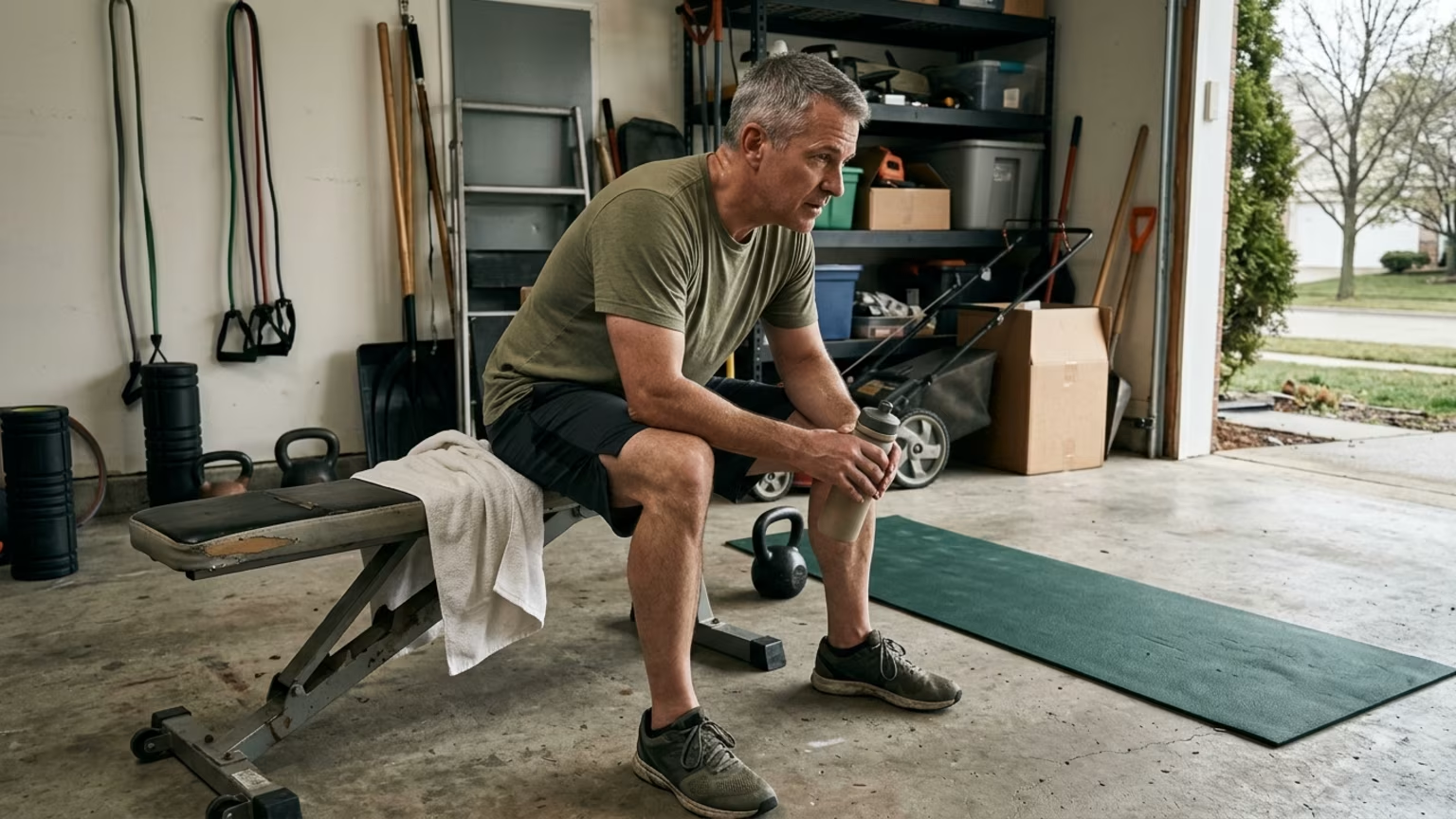

The 2026 NeuroFit trial found that three months of combined aerobic and resistance training significantly improved mood in midlife adults, without short-term cognitive gains.





In 2026, researchers published the NeuroFit randomized controlled trial in the journal npj Aging. The study measured how a combined exercise routine affected healthy adults in midlife. The paper was titled "Effects of a three-month exercise programme on cognition, mood and neurogenesis: the NeuroFit randomised controlled trial." The reported DOI for the study is 10.1038/s41514-026-00439-w.
Researchers wanted to track changes in mood, memory, and potential biological markers of brain health. The trial assigned participants to either an active training group or a control group. They assessed outcomes after a standard three-month period to see if short-term activity produced measurable changes. Midlife is a critical period for establishing habits that support longevity, making this data particularly relevant for service members.
Service members and veterans need reliable guidance on staying capable as they age. Middle age often brings physical changes, altered work schedules, and different daily routines. Understanding how exercise impacts the brain helps veterans make informed health decisions. The NeuroFit findings provide realistic expectations for adults starting a new fitness protocol.
Transitioning from active service to veteran life requires adjusting physical expectations. Many service members are used to high-intensity occupational demands that may not be sustainable later in life. Building a steady, moderate routine becomes more important than achieving peak physical performance. The NeuroFit data supports this shift by showing that moderate, consistent work still delivers real psychological value.
Physical activity connects directly to long-term health, mobility, and emotional resilience. This aligns with the World Health Organization's updated guidance on reducing cognitive decline and dementia risk. This guidance applies to adults without dementia, including people with normal cognition or mild cognitive impairment. The organization emphasizes healthy behaviors, management of related health conditions, and tailored multidomain interventions.
Veterans looking to maintain their capability can review BattleVet's healthy aging strategies through structured routines. Focusing on consistent movement supports longevity without relying on unproven claims. The NeuroFit trial reinforces the idea that regular activity offers immediate psychological support. Veterans can use this evidence to focus on steady training instead of rapid physical transformations.
The NeuroFit randomized controlled trial involved exactly 52 healthy adults. These participants were between the ages of 45 and 65. This sample did not specifically target a military or veteran cohort. Researchers assigned 27 participants to an active exercise group and placed 25 into a control group.
The active group was required to combine aerobic and resistance training to measure the effects of a mixed protocol. Participants completed these mixed workouts three times per week. They followed this structured schedule for three full months before the final assessment. Researchers carefully tracked the primary outcomes to see what differences emerged.
Cognitive performance served as the primary outcome for the NeuroFit study. Researchers assessed this function through pattern separation using the Mnemonic Similarity Task. This specific measure is a hippocampus-dependent test involving the ability to distinguish similar items. After three months of training, researchers found no measurable exercise-related improvement in the primary cognitive outcome.
First author Sahand Farmand provided essential context for this null finding. He suggested that cognitive benefits might require a longer or more intensive program. A three-month window may simply be too short to alter memory test scores significantly. Readers should not interpret this short-term result as evidence that exercise cannot support cognition over time.
While cognitive scores did not shift rapidly, the study found differences in emotional well-being. Mood-related measures improved significantly in the exercise group compared with the control group. Farmand noted that three months of exercise may be sufficient to significantly improve mood. He specified that this applies to healthy people who do not have depressive symptoms.
The study participants were healthy adults without baseline depressive symptoms. The results demonstrate that basic physical activity provides measurable emotional benefits for a general midlife population. These findings give veterans a practical reason to stick with a new routine. The psychological benefits appear to validate the physical effort long before cognitive tests show actual changes.
The research team also examined biological indicators related to hippocampal neurogenesis. They added participants' blood serum to human hippocampal stem cells in laboratory conditions. This procedure served as a noninvasive proxy for how exercise might influence stem-cell activity. Serum from the exercise group produced fewer hippocampal stem cells in a proliferative state.
This was compared directly to the serum taken from the control group. This laboratory assay did not directly measure new neuron formation inside the brains of the actual participants. It simply remains an in-vitro proxy used to study potential biological mechanisms. The laboratory findings should not be confused with confirmed physical brain growth in human subjects.
These findings should actively shape how veterans approach midlife fitness and health decisions. Active personnel and veterans should treat aerobic and resistance work as complementary parts of an ongoing plan. Expecting a rapid cognitive payoff from a few weeks of training is unrealistic and often causes frustration. The NeuroFit trial shows that mood improvements are a much more reliable short-term outcome.
Focusing on immediate emotional benefits can help sustain long-term adherence to a new routine. Veterans can find more information on building consistent training and performance habits that prioritize steady progress. It is important to avoid overestimating early scientific findings when designing a personal training program. Marketing claims often exaggerate early research to sell specific fitness products or cognitive supplements.
Because the NeuroFit study used a small sample of 52 healthy adults, its results are specific. The trial does not establish that the exact same results would occur in active-duty personnel. It also did not test individuals with post-traumatic stress disorder, depression, or traumatic brain injuries. Readers dealing with pain or previous injuries should scale their physical activity carefully.
The Veterans Health Administration increasingly utilizes technology-supported physical therapy for veterans with mobility limitations. Veterans can leverage these established telehealth resources rather than trying to copy an unspecified research protocol. Additional support and clinical options are discussed in our veteran lifestyle and healthcare resources. Establishing a functional, pain-free routine is essential for maintaining long-term physical capability.
A physical training routine never replaces a professional medical assessment. Anyone experiencing persistent low mood, major memory changes, or functional decline should seek clinical care. The VA provides structured programs that safely address both mental health and physical rehabilitation. Veterans can also review recovery and physical restoration resources to support overall wellness.
The NeuroFit trial confirms that three months of mixed aerobic and resistance training can significantly improve mood. The absence of short-term cognitive changes suggests that brain health requires sustained, long-term physical activity. As researchers continue studying the underlying mechanisms of neurogenesis, what specific exercise durations will prove necessary to protect cognitive capability in aging veterans?
Follow BattleVet for practical guidance on military and veteran health, strength, recovery, testosterone, sleep and healthy aging. Stay connected for new articles, research backed insights and clear information to help you stay capable for the years ahead.


A recent study associates 9 to 10 hours of weekly exercise with lower cardiovascular risk. Experts advise veterans to use 150 minutes as a practical baseline.

Retired FBI agent and 9/11 responder Jeffrey Miller is advocating for updated cancer screening policies in the World Trade Center Health Program. Here is what it means.

A 2026 cohort study links balance, lower-body strength, and aerobic fitness to lower mortality risk in older adults, offering key insights for veteran health.
Build better habits around strength, recovery, sleep, hormones and healthy aging with practical guidance for active military personnel and veterans.
Explore BattleVet