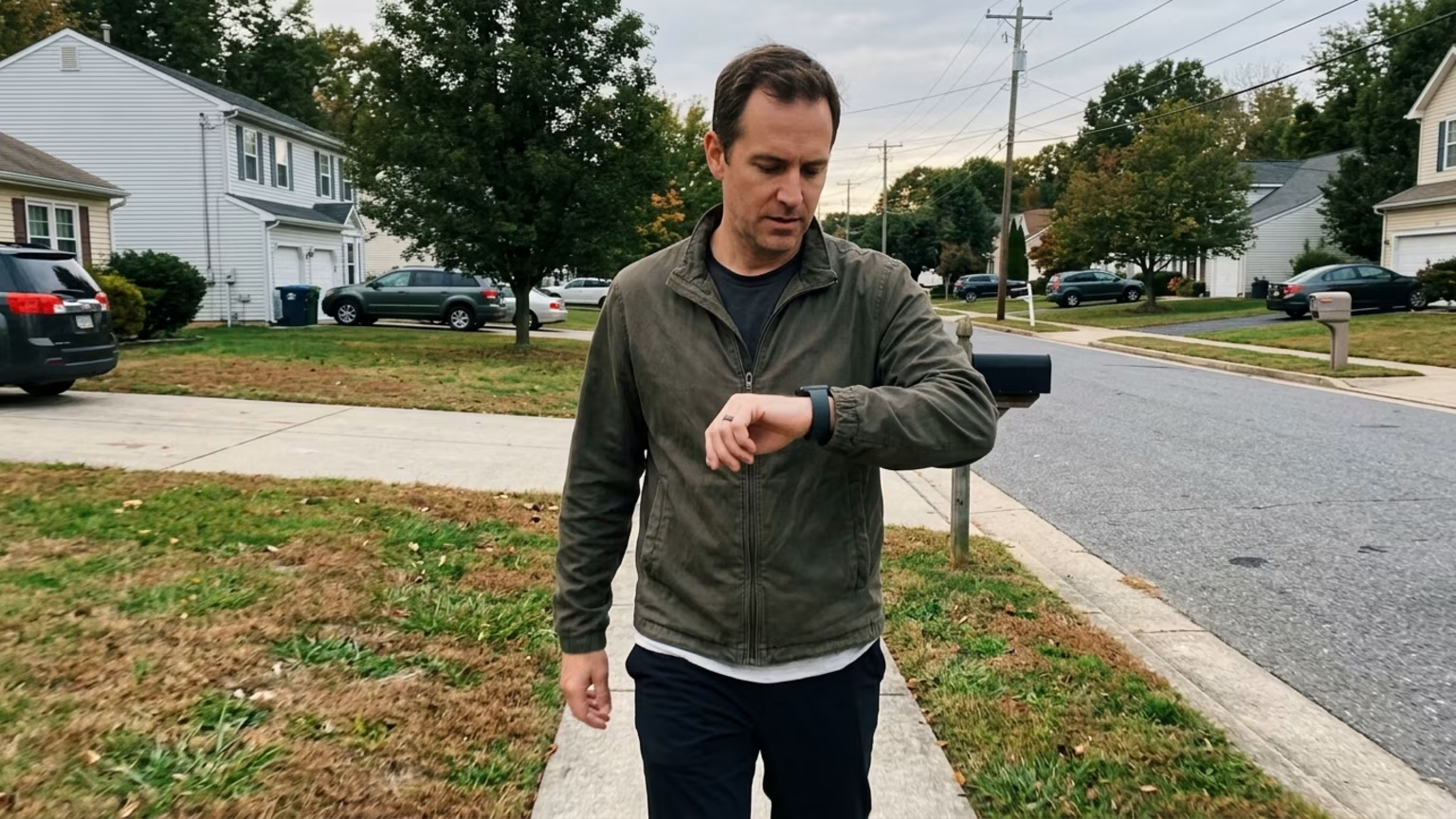

A 2026 NUS Medicine study analyzed wearable data to show how replacing 30 minutes of daily sitting with light activity can improve cardiometabolic markers.





In mid-September 2026, researchers from NUS Medicine published a study in BMC Medicine analyzing continuous wearable data from 1,967 adults in Singapore. The research team evaluated movement habits across three age groups using four weeks of continuous Oura Ring data. They found that older adults with a mean age of 74 years accumulated more daily physical activity and less sedentary time than university students. Using compositional data models, the researchers estimated that replacing 30 minutes of sitting per day with movement or sleep was associated with more favorable obesity and vascular health markers.
This update matters for active personnel and veterans because it reframes physical activity as a continuous 24 hour cycle. When veterans transition to civilian life, they frequently adopt desk jobs or routines with limited mobility. The assumption is often that advancing age naturally drives a steep decline in physical activity. However, this study suggests that daily environments and occupational demands strongly dictate how much we move.
For veterans working to preserve their physical capacity, these findings provide a highly realistic target. The research does not demand complex training regimens or extreme fitness overhauls to improve cardiometabolic markers. Instead, it highlights the cumulative impact of simple daily habits on long term physical capability. You can read more about tracking long term health metrics in our healthy aging resources.
Recognizing these patterns allows former service members to make practical adjustments to their daily schedules. Managing the entire movement budget can support healthy aging without overwhelming current rehabilitation plans. Small shifts away from sedentary time can help maintain baseline fitness. This approach protects long term cardiovascular capability without requiring a return to intense tactical conditioning.
The study categorized participants into three distinct cohorts with varying mean ages. The groups included 500 university students averaging 19.9 years and 437 working age adults averaging 41.1 years. The third group featured 1,030 older adults aged 67 to 80 years. The researchers tracked physical activity, sedentary behavior, and sleep across a continuous 24 hour cycle for each participant.
The older adult cohort accumulated the highest amount of physical activity. They averaged 420.28 minutes of physical activity per day. In contrast, working age adults averaged 346.55 minutes, and students recorded only 320.28 minutes. The older adults also maintained consistent activity levels across both weekdays and weekends.
Sedentary behavior followed a reverse pattern among the participant groups. Students accumulated the most sedentary time, averaging 633.89 minutes per day. Working age adults sat for an average of 581.28 minutes. Older adults recorded the least amount of sedentary time, averaging 500.86 minutes daily.
The students averaged 113.61 fewer minutes of physical activity and 133.03 more minutes of sedentary time than the older adults. According to Dr Ju Lynn Ong, the study’s first author, academic schedules and digital lifestyles may contribute to this trend. The researchers also pointed to food delivery services and ride hailing as potential factors for high sedentary time among younger adults. Student activity was mostly concentrated around class transitions and dropped by roughly 30 minutes on weekends.
The research team used compositional data analysis to model specific behavior changes. Reallocating 30 minutes away from sedentary behavior to other behaviors was associated with a body mass index lower by 0.28 kg/m2. This same shift was associated with a body roundness index lower by 0.07. Reallocating 30 minutes to sleep from other behaviors was associated with a body mass index lower by 0.21 kg/m2.
Shifting 30 minutes to physical activity from other behaviors correlated with further positive markers. It was associated with a body mass index lower by 0.13 kg/m2 and a body roundness index lower by 0.04. It also correlated with a pulse wave velocity difference of -0.05 m/s and a composite vascular health score difference of -0.01. Dr Shuo Qin, a co-first author, noted that shifting 30 minutes of sitting to any form of movement was linked to improvements across multiple obesity and arterial stiffness markers.
The researchers also examined time allocated to sleep across the groups. Students allocated the least time to sleep at 431.75 minutes per day. Working age adults averaged 445.77 minutes of sleep per day. Older adults allocated the most at 455.62 minutes, though the researchers noted their actual sleep was more fragmented.
These findings reinforce a shift toward managing total daily movement rather than focusing exclusively on structured exercise. Traditional physical activity messaging often focuses on preserving mobility for older populations. However, Professor Michael Chee, the senior author of the study, argued that this messaging must expand to address the high sedentariness seen among younger adults. For veterans, this means evaluating the entire day for long blocks of uninterrupted sitting.
The data supports adopting a 30 minute block as a practical behavior change target. You do not need to treat this 30 minute period as a single continuous workout session. Veterans who spend long periods at a desk or driving can use short movement interruptions to reduce total sedentary time. Breaking up sitting time with light activity can support better vascular health markers over time.
This approach aligns well with existing veteran healthcare strategies focused on long term capability. The Department of Veterans Affairs offers programs like Gerofit and Gerofit to Home for former service members. These VA programs combine aerobic conditioning and whole body strength training with balance work and flexibility. The goal is to reduce prolonged sitting while maintaining overall physical competence, which we frequently discuss in our strength, fitness and body composition library.
VA Whole Health materials emphasize movement options that accommodate chronic pain or disabling conditions. These options include low impact exercise, stretching, and breathing, along with balance and strength focused sessions. Movement should complement your current health status rather than replace structured rehabilitation entirely. Managing the entire movement budget can include light activity alongside your normal training, as detailed in our training and performance section.
It is important to recognize the limitations of this type of associative research. The findings come from a specific Singaporean sample, so they may not generalize directly to active duty personnel or veterans in other countries. Furthermore, the 30 minute findings are modeled reallocations of time within a 24 hour cycle, not results from a randomized controlled trial. The reported effect sizes are population level estimates, meaning that walking for 30 minutes will not necessarily produce an exact drop in your body mass index.
Wearable technology can help identify patterns such as inconsistent activity or insufficient sleep. However, tracking devices simply provide estimates of your daily behavior patterns. The NUS study relied on continuous Oura Ring data, but wearables alone do not automatically change health outcomes. Data must translate into sustainable daily habits to improve cardiometabolic profiles.
Replacing sitting with movement should always be individualized for your specific situation. Veterans managing neurological conditions, service related injuries, or cardiovascular disease should discuss activity shifts with a clinician. Physical activity in this context does not mean returning to heavy loaded carries or maximal strength tests. The focus remains on steady capacity preservation through realistic daily movement routines.
As continuous wearable tracking provides clearer pictures of our daily habits, researchers can better map the relationships between movement and cardiometabolic health. Will future clinical guidelines move away from weekly exercise minimums to focus on 24 hour behavior compositions tailored specifically for veteran rehabilitation?
Follow BattleVet for practical guidance on military and veteran health, strength, recovery, testosterone, sleep and healthy aging. Stay connected for new articles, research backed insights and clear information to help you stay capable for the years ahead.


The 2026 NeuroFit trial found that three months of combined aerobic and resistance training significantly improved mood in midlife adults, without short-term cognitive gains.

A recent study associates 9 to 10 hours of weekly exercise with lower cardiovascular risk. Experts advise veterans to use 150 minutes as a practical baseline.
Retired FBI agent and 9/11 responder Jeffrey Miller is advocating for updated cancer screening policies in the World Trade Center Health Program. Here is what it means.
Build better habits around strength, recovery, sleep, hormones and healthy aging with practical guidance for active military personnel and veterans.
Explore BattleVet