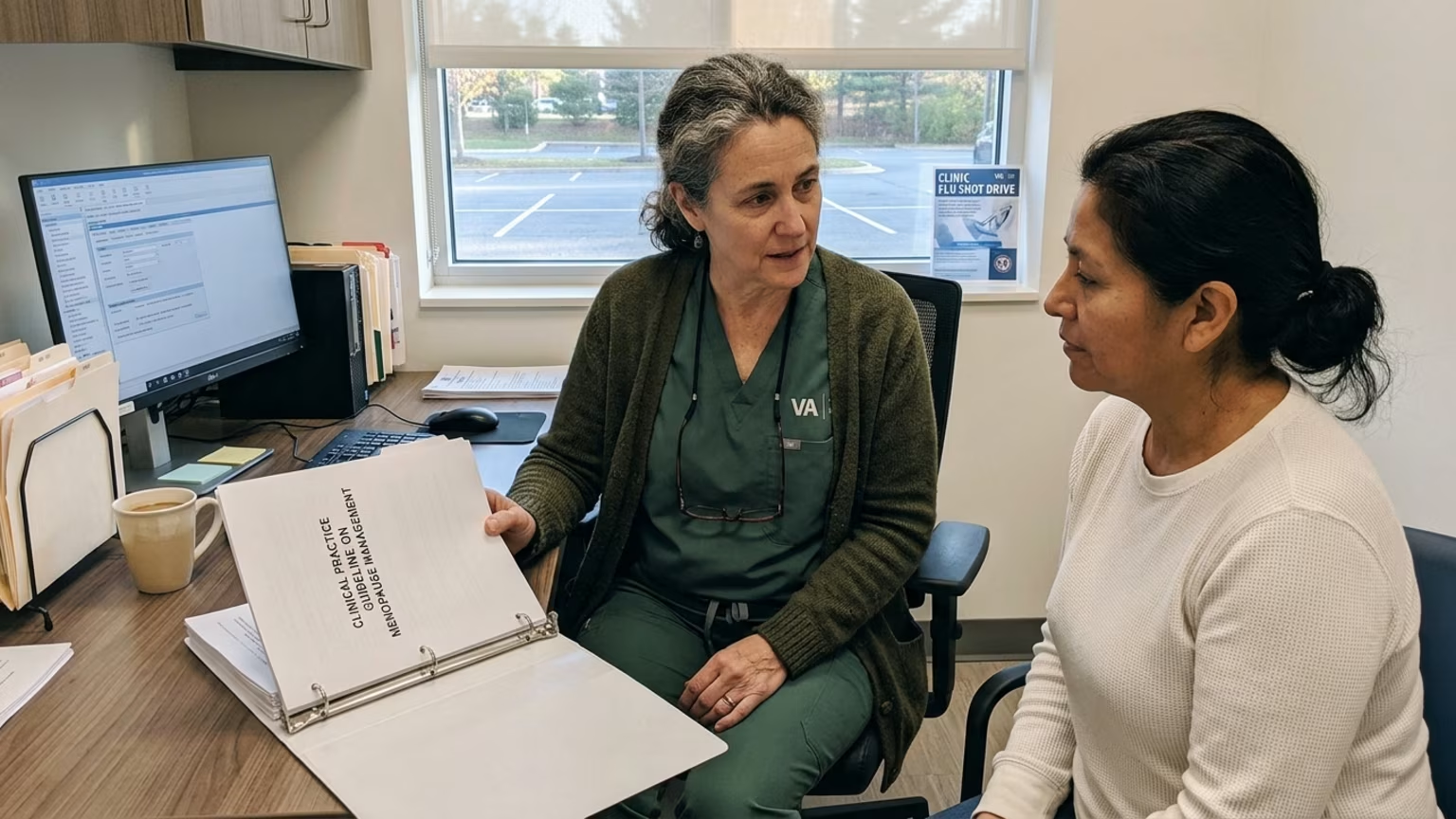

The VA and DoD released the 2026 Clinical Practice Guideline on Menopause. Learn how the 43 evidence-based recommendations impact military and veteran care.





The Department of Veterans Affairs and the Department of Defense jointly released the 2026 Clinical Practice Guideline on Menopause on October 5, 2026. The new clinical publication is designed to support more consistent care for individuals experiencing perimenopause and menopause across their respective health systems. Officials intend for this evidence-based framework to help standardise symptom diagnosis and treatment for both active duty personnel and veterans. The release provides a clear clinical reference for medical providers navigating complex health discussions with their patients.
Menopause and perimenopause introduce physiological changes that can significantly impact daily function and overall well being. Sleep disruption and mood changes are common concerns that can directly affect job performance for active personnel. By improving symptom recognition at earlier stages, military clinicians can help patients address these treatable concerns more effectively. This proactive approach supports long term physical capability and aligns with broader priorities in veteran lifestyle and healthcare.
Air Force Maj. (Dr.) Kathleen Pombier noted that individualized treatment is key to this updated clinical approach. She emphasized that the focus must remain on whole-person care rather than isolated symptom management. Treatment decisions should account for specific symptoms, personal health history, individual preferences, and overall safety. This perspective ensures that health decisions respect the unique physical demands placed on service members throughout their careers.
Army Col. (Dr.) Erin Keyser explained that the new framework can help clinicians identify appropriate treatment options during a standard visit. This structured guidance is particularly useful in clinical settings where an obstetrician or gynecologist might not be readily available. Keyser noted that better symptom management could potentially help women remain in service and pursue future leadership opportunities. While this is an expressed goal of the update, the primary focus remains on improving the immediate quality of care.
The guideline covers a wide range of specific symptoms that impact a veteran's daily quality of life. These health factors include hot flashes, sleep problems, clinical depression, and anxiety. The guideline also addresses cognitive symptoms that are often described as brain fog. Proper diagnosis helps separate menopause-related cognitive changes from other potential health issues that require different medical interventions.
The framework explicitly addresses long term health considerations such as bone health, weight management, cardiovascular risk, and breast-cancer risk. Maintaining bone density and managing cardiovascular health are essential components of a veteran's overall physical capability as they age. By addressing these structural health factors early, clinicians can better support patients through the physical transitions of menopause. Readers interested in maintaining physical capability can review related healthy aging articles for additional context on long term wellness.
The VA and DoD guideline contains 43 evidence-based recommendations organized for immediate practical application. These medical recommendations are structured around four distinct clinical algorithms that guide healthcare providers through the evaluation process. The specific modules cover initial diagnosis, active menopause management, perimenopause management, and the treatment of genitourinary or sexual dysfunction symptoms. The working group utilized systematic evidence reviews and patient focus groups to shape these foundational guidelines.
The development process required careful consideration of medical evidence quality alongside potential treatment benefits and harms. The team weighed patient preferences, health equity, and resource availability when drafting the final recommendations. They also considered basic accessibility and practical feasibility during the development process. Pombier stated that the process sought to be completely transparent about where current clinical evidence is strong.
The group also clearly identified specific areas where evidence remains weak. In these specific areas, more research is necessary before firm recommendations can be established. This careful distinction prevents clinicians from treating preliminary data as established medical fact. It reinforces the primary goal of providing safe and reliable care to service members.
Separate from the new VA and DoD framework, the broader landscape of women veterans' health research is actively expanding. Spectrum News 1 recently reported that Ohio State researchers received a $3.06 million DoD grant. This specialized funding supports a comprehensive four-year project focusing on the mental and physical health of women veterans during menopause. The study operates as a research initiative aimed at gathering clinical data to inform more targeted care in the future.
The Ohio State study is carefully designed to follow 125 women veterans ranging from ages 45 to 55. These veteran participants are currently receiving care through the Columbus VA Women’s Health Clinic. The clinical trial requires participants to complete three separate assessment visits over the course of one year. Those interested in managing rest and recovery can review resources covering recovery and sleep.
The Ohio State required assessments include objective measurements of mood, cognition, and sleep. Researchers will also track physical pain, systemic stress, hormone testing, and brain-based metrics. Ohio State co-lead Dr. Stephanie Gorka described the project’s central aim as gathering high quality data that could eventually inform more targeted care. Because this is a prospective research initiative, it does not currently serve as evidence that any particular menopause treatment works.
Other national medical organizations are also reviewing menopause treatment data to update their own distinct guidelines. MedPage Today separately reported on a recent American College of Physicians guideline targeting the pharmacologic treatment of vasomotor symptoms. That distinct clinical evidence review included 90 unique trials across 102 medical publications. While completely separate from the VA and DoD release, it highlights the growing volume of clinical data surrounding modern menopause care.
The newly released guideline fundamentally changes how critical information is presented to patients within the military system. The VA guideline page now provides a full guideline document, a clinician summary, a quick-reference guide, and a patient-provider tool. These comprehensive documents position the new framework as a reliable clinical reference for active duty and veteran care. They also serve as a highly practical resource for facilitating detailed discussions between patients and their healthcare teams.
The medical resources outline both hormonal and nonhormonal treatment options for managing disruptive vasomotor symptoms. For specific genitourinary symptoms, the available medical options include local vaginal estrogen and systemic estrogen. Clinicians might also recommend vaginal dehydroepiandrosterone or specialized moisturizers based on patient needs. The quick-reference tools are specifically designed to help military clinicians navigate these choices efficiently during routine medical appointments.
Despite the detailed recommendations provided in the text, the VA and DoD guideline is explicitly presented as a clinical aid. The official guideline page cautions that the document is a tool to assist clinicians and should not replace clinical judgment. The 43 evidence-based recommendations do not dictate a single rigid treatment pathway that every patient must strictly follow. Instead, the framework heavily promotes a model of shared decision-making based on individual health factors and personal safety considerations.
This shared decision-making model is particularly important when evaluating the potential risks and benefits of various hormonal therapies. Because treatment safety is a core focus of the guideline, providers must carefully review each patient's breast-cancer risk and cardiovascular history. The patient-provider tool is designed specifically to make these complex risk assessments easier to understand during short clinical visits. Clear medical communication ensures that veterans remain fully informed about the potential side effects of any prescribed symptom management strategy.
This procedural shift reinforces the core concept that successful menopause management requires a highly tailored medical approach. Military and veteran clinicians are encouraged to use the four clinical algorithms as a starting point for their medical evaluation. They must then adapt their medical recommendations based on the patient's specific symptom severity and comprehensive medical history. Veterans can expect their healthcare providers to focus more heavily on comprehensive symptom tracking and collaborative long term treatment planning.
As the VA and DoD implement these comprehensive clinical guidelines across their respective health systems, the focus on whole-person care continues to evolve. Ongoing research initiatives like the Ohio State veteran study will likely yield even more detailed data on how menopause impacts long term physical capability. The commitment to tracking complex health metrics ensures that military medical frameworks will continue to adapt to new evidence. How will these expanding medical datasets shape the next generation of specialized health protocols for active duty women and aging veterans?
Follow BattleVet for practical guidance on military and veteran health, strength, recovery, testosterone, sleep and healthy aging. Stay connected for new articles, research backed insights and clear information to help you stay capable for the years ahead.


An expert analysis of the Arizona State University hockey incident reveals why team-building workouts require clear planning and explicit stop-work authority.


Learn how veterans can preserve muscle health and prevent sarcopenia with clinical strategies for resistance training, endurance work, and targeted protein intake.

Recent updates from Urology Times and the Pentagon shift the conversation on hormone therapy. Learn how new clinical data impacts veteran health decisions.
Build better habits around strength, recovery, sleep, hormones and healthy aging with practical guidance for active military personnel and veterans.
Explore BattleVet