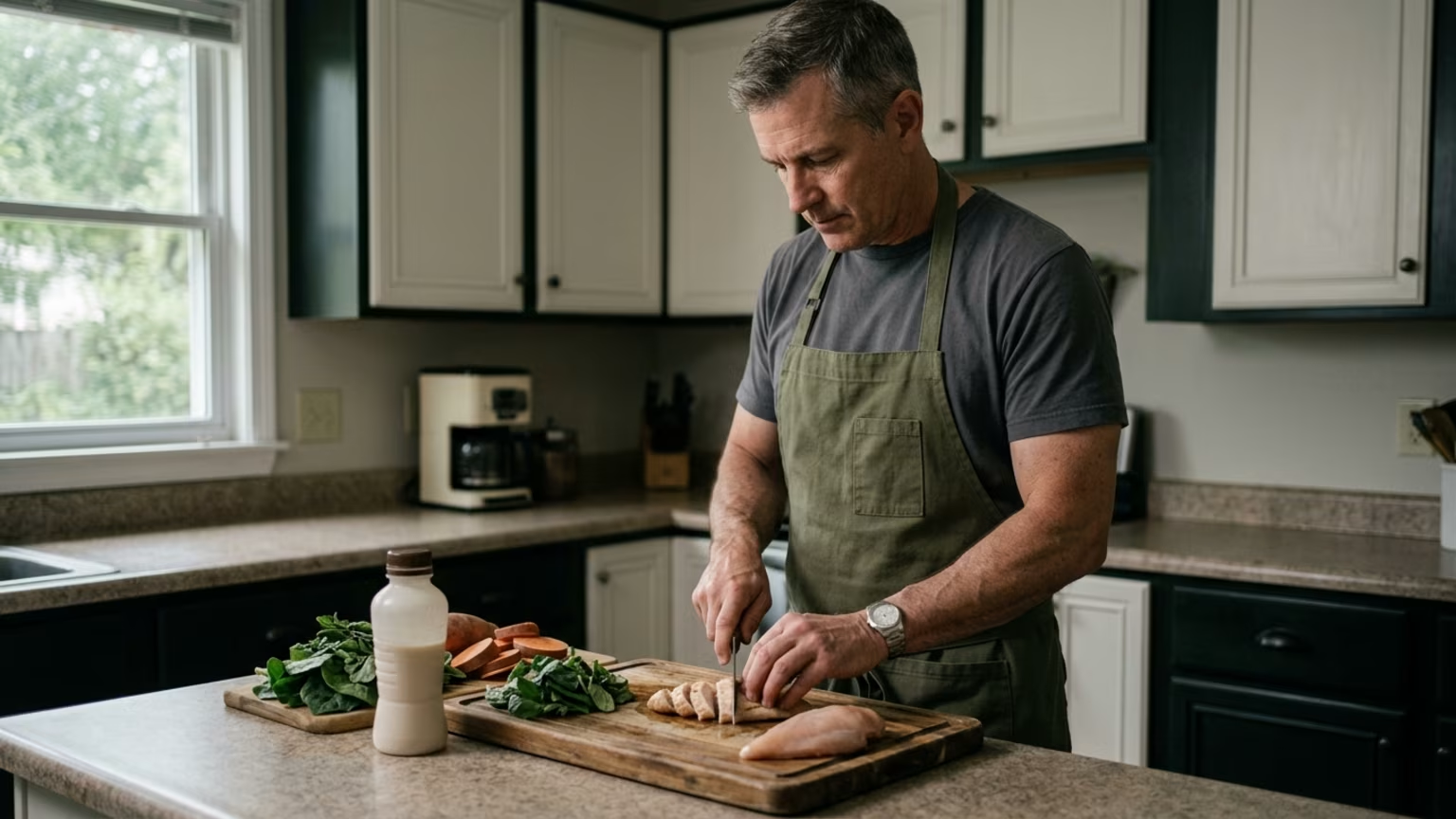

Learn how veterans can preserve muscle health and prevent sarcopenia with clinical strategies for resistance training, endurance work, and targeted protein intake.





On March 21, 2025, the European Association of Preventive Cardiology published a scientific statement online ahead of print regarding muscle health. The publication detailed the influence of exercise and nutrition on the prevention and management of sarcopenia. In a parallel review, the Military Officers Association of America (MOAA) reported on a trial involving older former military men. These medical and organizational reports examined the physical routines and nutritional targets required to preserve strength and long-term capability.
Muscle preservation is a practical priority for active personnel and veterans as they transition through midlife. The military lifestyle demands high physical capability, but structured physical activity often shifts significantly after leaving the service. Without mandatory training programs, many veterans experience a gradual decline in muscle mass and functional strength. This gradual loss can eventually lead to sarcopenia.
Sarcopenia is not simply a matter of looking less fit as the years pass. It is a recognized medical condition characterized by the progressive loss of skeletal muscle mass and strength. When muscle tissue deteriorates, the skeletal system loses its primary shock absorbers and stabilizers. This leads to an increased risk of falls, joint pain, and a severe loss of functional capacity.
For a veteran who spent decades relying on physical readiness, this decline can severely impact their quality of life. Addressing this condition early requires a clear understanding of applied medical research. BattleVet provides research-backed educational articles covering military health, performance, recovery, and sleep. We focus specifically on military and veteran health because this population faces unique physical challenges over time.
Maintaining a high quality of life requires understanding how healthy aging relates to daily physical habits. The recent European scientific statement reinforces the need to connect physical performance with long-term medical health. Military service places unique stresses on the skeletal and muscular systems. Losing muscle mass directly reduces a person's ability to perform daily tasks, recover from illness, and avoid injury.
Finding ways to preserve muscle tissue is a critical part of veteran life and maintaining lasting independence. Veterans must navigate these health decisions with better context, separating credible evidence from modern fitness trends. The evidence clearly points toward a proactive, medically supervised approach to physical maintenance.
The MOAA report provided specific data from a trial focused entirely on older former military men. This trial paired dedicated resistance training with a targeted protein intake of 1.6 grams per kilogram of body weight. Researchers tracked these interventions to determine how this combination affected overall physical function. The final results showed improved body composition and better physical performance among the participants.
This specific protein target offers a measurable baseline for nutritional planning in aging populations. Processing high amounts of dietary protein puts a specific workload on the body, making safety a primary concern. The MOAA report noted that the trial found no harm to kidney or liver function among the participants. However, this safety finding is explicitly limited to older adults who already possess healthy kidney function.
Individuals must not generalize these safety findings to people with existing kidney or liver disease. Processing elevated amounts of protein requires healthy organ function. Anyone with compromised kidney health needs individualized medical guidance before changing their nutritional habits. The trial simply demonstrates that a higher protein approach can be safe and effective for a healthy population of older veterans.
MOAA also reported population-level figures regarding sarcopenia prevalence and its associations with mortality. However, this portion of the report is a secondary article that cites outside research. Readers and clinicians must trace these population figures back to the original studies before making broad clinical assumptions.
The European Association of Preventive Cardiology scientific statement adds necessary clinical nuance to the conversation. The authors advise combining dedicated resistance exercise with endurance exercise and adequate nutrition to manage sarcopenia. This confirms that a multifaceted approach is the most effective strategy for muscle preservation. Single-method fitness programs are less likely to produce the necessary adaptations for long-term physical health.
However, the European statement focused heavily on patients with cardiovascular disease. The authors noted that optimal intervention doses for this specific population remain uncertain. There is no universally established exercise or nutrition prescription that applies safely to everyone with cardiovascular issues. The medical community still lacks complete evidence for the perfect balance of physical stress and recovery in these patients.
This uncertainty highlights a major gap in the current application of exercise science. The cardiovascular system must support the muscular system during any physical exertion. When managing sarcopenia, the heart has to work harder to pump blood to active muscle tissue during resistance training. This physiological demand is why the European authors expressed caution regarding patients with existing cardiovascular disease.
Pushing the muscular system to grow requires placing intentional stress on the body. If the cardiovascular system is compromised, that stress can cross the line from beneficial to dangerous. While exercise is beneficial, the exact amount, intensity, and frequency require careful management for those with heart conditions. Patients cannot simply adopt a general exercise recommendation as an individualized training plan.
This evidence shifts the focus from generalized fitness advice to clinically supervised health management. The new information reinforces the need to combine resistance training, endurance work, and adequate protein intake. Veterans looking to maintain their strength, fitness and body composition should view these three elements as a unified strategy. Relying on cardiovascular exercise alone will not prevent age-related muscle loss.
The research clarifies that adequate nutrition is a mandatory component of the physical maintenance equation. Resistance training provides the stimulus for muscle growth, but protein provides the structural building blocks. The 1.6 grams of protein per kilogram of body weight used in the trial serves as a useful reference point. However, readers must discuss their specific nutritional targets with a qualified clinician.
This guidance also changes how veterans with pre-existing conditions should approach physical activity. The European statement's caution regarding cardiovascular disease serves as a critical medical reminder. Veterans with heart conditions should not assume that more exercise is automatically better. They must work directly with healthcare providers to find a safe, effective dose of physical exertion.
The most defensible practical step is to schedule a comprehensive health review with a primary care provider. Patients should explicitly discuss their goals for sarcopenia prevention and long-term mobility. Clinicians can help evaluate kidney function before a patient increases their daily protein intake. They can also provide specific clearance for resistance and endurance training based on a patient's cardiovascular health.
Veterans should bring up their physical activity history during these routine medical appointments. Clear communication helps doctors understand a patient's baseline capability and potential risk factors. A doctor can then help structure a safe progression framework for physical activity. This collaborative approach ensures that fitness efforts support long-term health rather than causing accidental harm.
Veterans must adapt their mindset regarding physical training as they age. Standard military fitness tests prioritize maximum output over a short duration. Sarcopenia prevention requires a completely different approach focused on consistency, recovery, and steady muscle retention. Prioritizing joint health and cardiovascular safety is far more important than achieving personal records in the gym.
It is also important to request original studies when reading secondary reports about veteran health. Understanding the exact methods and limitations of a trial prevents dangerous medical misunderstandings. If a trial only tested healthy individuals, its results cannot safely apply to patients with chronic diseases. Treating medical research with careful scrutiny is a necessary skill for navigating modern healthcare.
As research continues to explore the mechanisms of muscle preservation, medical guidelines will likely become more specific. The acknowledgment that optimal exercise doses remain uncertain for cardiovascular patients points to a need for better clinical trials. Will future medical research finally establish clear, individualized exercise prescriptions for veterans managing complex health conditions?
Follow BattleVet for practical guidance on military and veteran health, strength, recovery, testosterone, sleep and healthy aging. Stay connected for new articles, research backed insights and clear information to help you stay capable for the years ahead.



Recent updates from Urology Times and the Pentagon shift the conversation on hormone therapy. Learn how new clinical data impacts veteran health decisions.

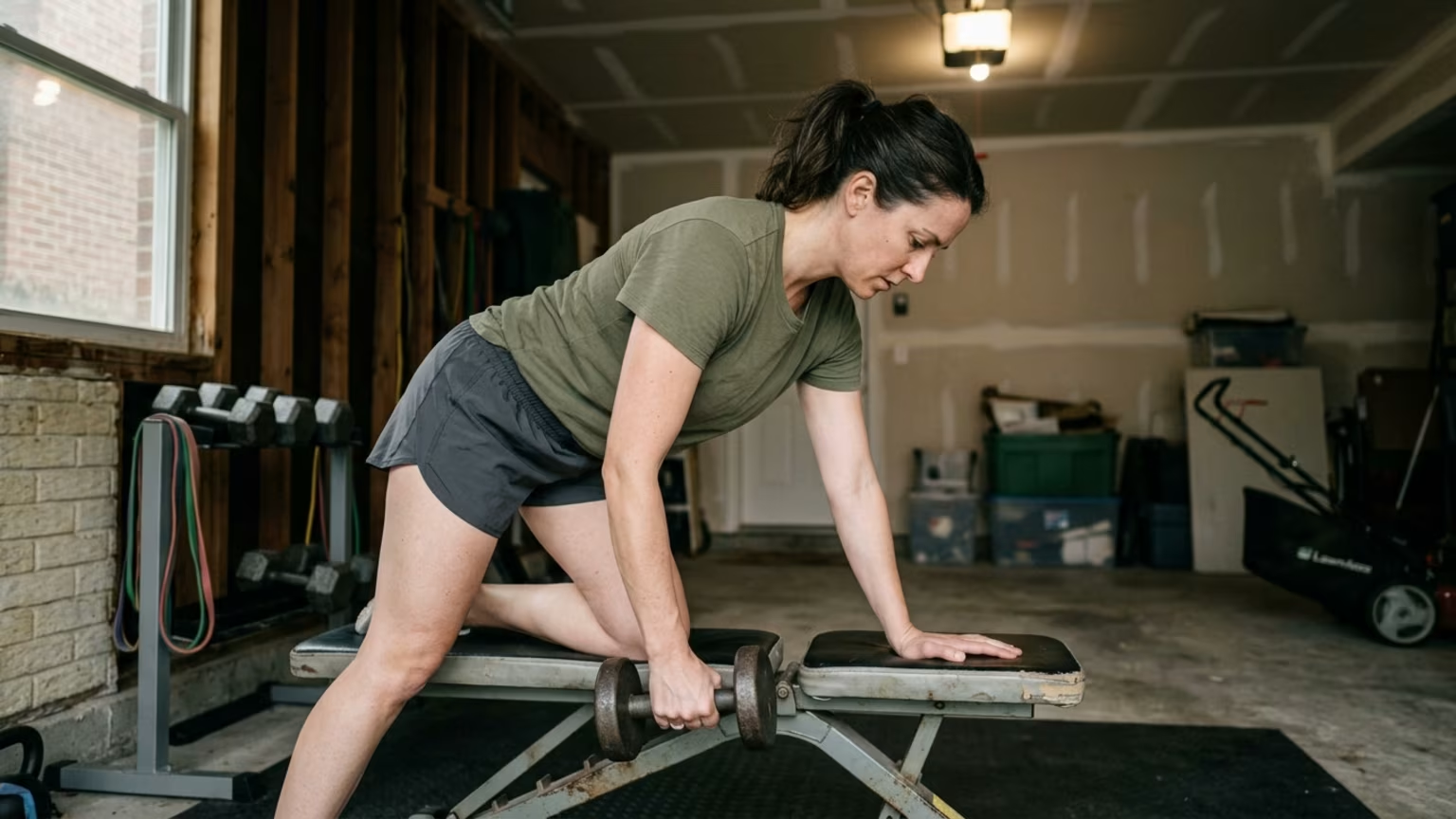
A recent study shows that moderate and heavy resistance training can lower MRI-estimated brain age in older adults. Learn how veterans can apply these findings.

A JAMA Cardiology analysis shows physical decline can precede heart events by years, giving veterans a clear metric for early medical discussions.
Build better habits around strength, recovery, sleep, hormones and healthy aging with practical guidance for active military personnel and veterans.
Explore BattleVet