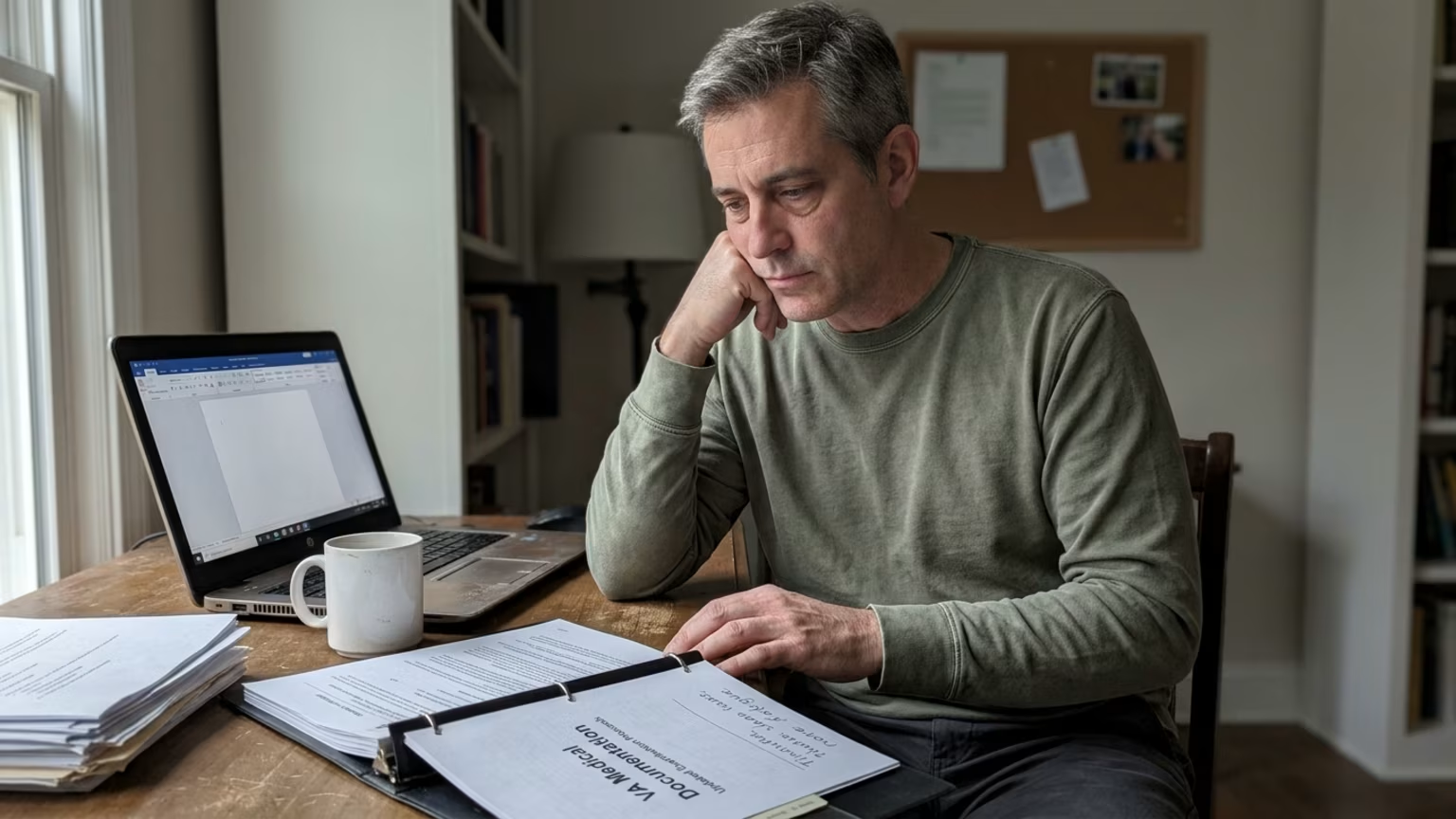

Updated guidance advises veterans on preparing for VA tinnitus exams by documenting concrete functional impacts like sleep disruption and next-day fatigue.





On September 21, 2026, FedLaws updated its comprehensive claims guidance article. The publication is titled "VA Tinnitus C&P Exam: Evidence, Nexus, and What to Expect." It focuses on preparing veterans for Compensation and Pension examinations related to tinnitus claims. The resource details how examiners assess functional impacts like sleep disturbance and concentration problems.
The guidance explains that a direct service-connection claim generally depends on three specific elements. Veterans need evidence of a current tinnitus condition. They must document an in-service event or exposure that could have caused the condition. Finally, a claim requires a medical nexus linking the current condition to military service.
The C&P examiner gathers evidence and prepares a report. The VA Regional Office then makes the final decision on the claim. The updated article does not quote a VA official, independent audiologist, or treating clinician directly. Its exam preparation recommendations should therefore be viewed as third-party guidance rather than an independently verified VA policy statement.
Subjective tinnitus cannot be objectively measured with a physical test. Because of this limitation, the veteran’s detailed and consistent account is especially important to the examination record. The primary article identifies service treatment records, post-service medical records, and lay evidence as the three main evidence categories. Reviewing existing medical and lay statements for chronology and consistency before the exam is highly recommended.
The updated guidance specifically recommends describing concrete effects rather than simply saying the ringing is bothersome. Veterans should explain what happens, how often it happens, and what the daily consequences are. Functional impact questions during the exam may address sleep disruption, difficulty concentrating, and interference with conversations. Examiners might also ask about frustration, stress, work effects, and relationship effects.
I remember waking up after a poor night of sleep and realizing that my training recovery was taking much longer than it used to. I realized that readiness is more than just pushing through the fatigue. It requires a dedicated approach to sleep and hormonal health, which completely shifted how I view long term capability. When constant ringing fractures your rest, the resulting daytime fatigue directly impacts your physical baseline.
Documenting these specific functional losses helps build a factual medical record. It moves the conversation from a general subjective complaint to a measurable loss of capability. Active service members and veterans reading our articles on recovery and sleep know that tracking physical symptoms is vital for maintaining long term health.
The relationship between chronic ear ringing and poor rest is widely noted in clinical research. The FedLaws article cites a Board of Veterans’ Appeals decision that referenced specific medical research. In that cited research, 71 percent of tinnitus patients reported sleep problems. This is a cited finding in the article, but it is not evidence that 71 percent of all veterans with tinnitus experience sleep disruption.
The guidance states that recurrent tinnitus receives a single 10 percent schedular rating under Diagnostic Code 6260. This rating does not increase merely because the ringing is perceived in one ear, both ears, or the head. Documenting severe functional impacts may strengthen the factual record. However, the primary article does not promise that documenting fatigue will increase the standalone tinnitus rating beyond 10 percent.
Sleep disturbance and concentration problems should not automatically be attributed to tinnitus alone. These issues can stem from multiple causes like anxiety, depression, or sleep apnea. A recent peer-reviewed article concerning military service members and veterans highlights these complex interactions. It notes that tinnitus and PTSD can share symptoms including concentration difficulties, trouble sleeping, irritability, and avoidant behavior.
These overlapping symptoms mean veterans must be clear about their medical history. An examination might include a physical ear examination, audiometric testing, a hearing test, and speech-recognition testing. Veterans tracking their physical capability should review our military health resources to understand how different diagnostic evaluations function together.
An examination may include a physical ear examination, audiometric testing, a hearing test, and speech-recognition testing. These diagnostic tools help the examiner rule out other mechanical issues within the ear. However, they cannot physically measure the internal ringing that defines subjective tinnitus. This lack of objective measurement makes the functional impact interview the most critical part of the appointment.
The examiner will ask exactly when the ringing began and what it sounds like. They will want to know how often it occurs and whether the noise is constant. Veterans should also be prepared to detail their military and post-service noise exposure during this conversation. Providing a clear timeline of this exposure helps establish the required medical nexus.
Veterans preparing for claims are advised to track how tinnitus disrupts sleep onset and maintenance. The guidance recommends beginning a symptom log before the examination. You should record your bedtime, the approximate time needed to fall asleep, and specific nighttime awakenings. Veterans should note whether tinnitus caused or prolonged each awakening and the time needed to return to sleep.
The article provides a specific example of how to frame these disruptions. It links louder nighttime ringing to waking two or three times, next-day exhaustion, and reduced functioning at work. Track next-day effects in functional terms like missed work or reduced alertness. You should also note slower task completion, mistakes, or difficulty following conversations.
A supporting nexus opinion linking these conditions to service must meet specific evidentiary standards. The opinion should use the VA evidentiary formulation "at least as likely as not." Weaker language such as "possible" or "cannot be ruled out" does not meet this threshold. Relevant documentation includes noise exposure, ear injuries, audiograms, and primary-care records mentioning tinnitus.
The article clarifies that a sleep complaint recorded at a tinnitus examination does not by itself establish a separate compensable sleep disorder. Identifying sleep problems, depression, anxiety, and hearing loss as secondary conditions requires further medical action. Secondary claims require medical evidence connecting the additional condition to service-connected tinnitus. Veterans dealing with complex cases often find our veteran lifestyle and healthcare library helpful for navigating these administrative processes.
The current guidance reflects a broader shift toward documenting how health conditions affect daily functioning. Medical professionals are moving away from describing symptoms only in diagnostic terms. For veterans, the practical importance of this approach is significant. It highlights the distinction between proving tinnitus itself and documenting a separate condition that may require its own diagnosis.
Veterans must bring or identify relevant records to support their claims. These materials include service treatment records, audiograms, audiology evaluations, and primary-care notes. Statements from people who have directly observed the effects of the veteran's tinnitus are also critical. Lay evidence helps corroborate the subjective complaints reported during the medical examination.
These overlapping health issues demand careful record keeping from veterans and their medical teams. A veteran's personal statement is important evidence about their subjective daily symptoms. However, the guidance notes that a personal statement is not the same as a clinician’s medical opinion. Both are necessary to successfully document diagnosis and establish medical causation.
Veterans who understand this shift can approach their examinations with better preparation. They recognize that presenting a complete picture of their daily health is their responsibility. The examiner is there to gather evidence based on the veteran's statements and medical records. Providing structured, clear information ensures the final report accurately reflects the veteran's true condition.
Veterans should prepare a concise timeline covering the first noticed ringing and relevant military noise exposure. This timeline should include post-service exposure, the continuity of symptoms, and the onset of sleep or concentration problems. A veteran should report only effects that are actually experienced. They must distinguish between difficulty falling asleep, waking during the night, early-morning awakening, and poor sleep quality.
The guidance cautions against both minimizing and exaggerating symptoms during the evaluation. Underreporting may leave the examiner with an incomplete picture of the condition. Conversely, unsupported or inconsistent descriptions may undermine the veteran's credibility. Record patterns rather than isolated dramatic episodes, noting whether symptoms worsen in quiet environments or during periods of stress.
The article emphasizes that veterans should not treat the exam as a treatment appointment. It describes the appointment as an evidence-gathering event rather than a visit for medication, treatment, or specialist referral. If sleep or mental health symptoms are substantial, you should discuss them with an appropriate health professional. A documented diagnosis and a qualified medical opinion are necessary when pursuing a separate or secondary claim.
As the understanding of overlapping conditions like PTSD, sleep disruption, and tinnitus grows, how will future claims processes adapt to accurately measure the compounding physical toll on veterans?
Follow BattleVet for practical guidance on military and veteran health, strength, recovery, testosterone, sleep and healthy aging. Stay connected for new articles, research backed insights and clear information to help you stay capable for the years ahead.


A 2026 study details rising insomnia rates among U.S. veterans. Review how sleep problems impact mental health, recovery, and long-term physical capability.


The VA's Center for Women Veterans has launched a new outreach initiative to help female veterans navigate enrollment, eligibility, and specialized health care.
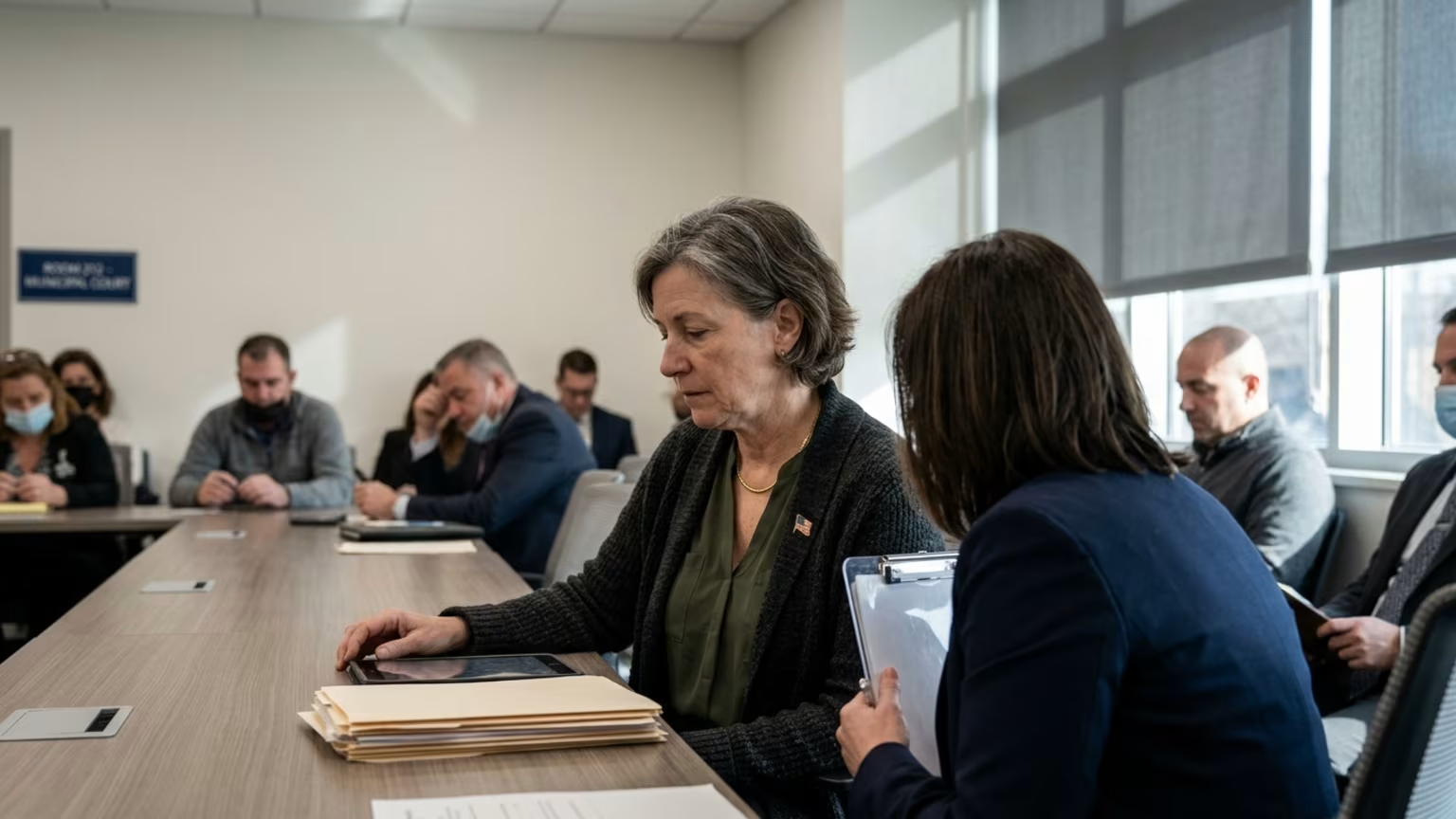
A New Jersey judge ordered a trial for Menlo Park Veterans Memorial Home over allegations that leaders prohibited staff from wearing masks during the pandemic.
Build better habits around strength, recovery, sleep, hormones and healthy aging with practical guidance for active military personnel and veterans.
Explore BattleVet