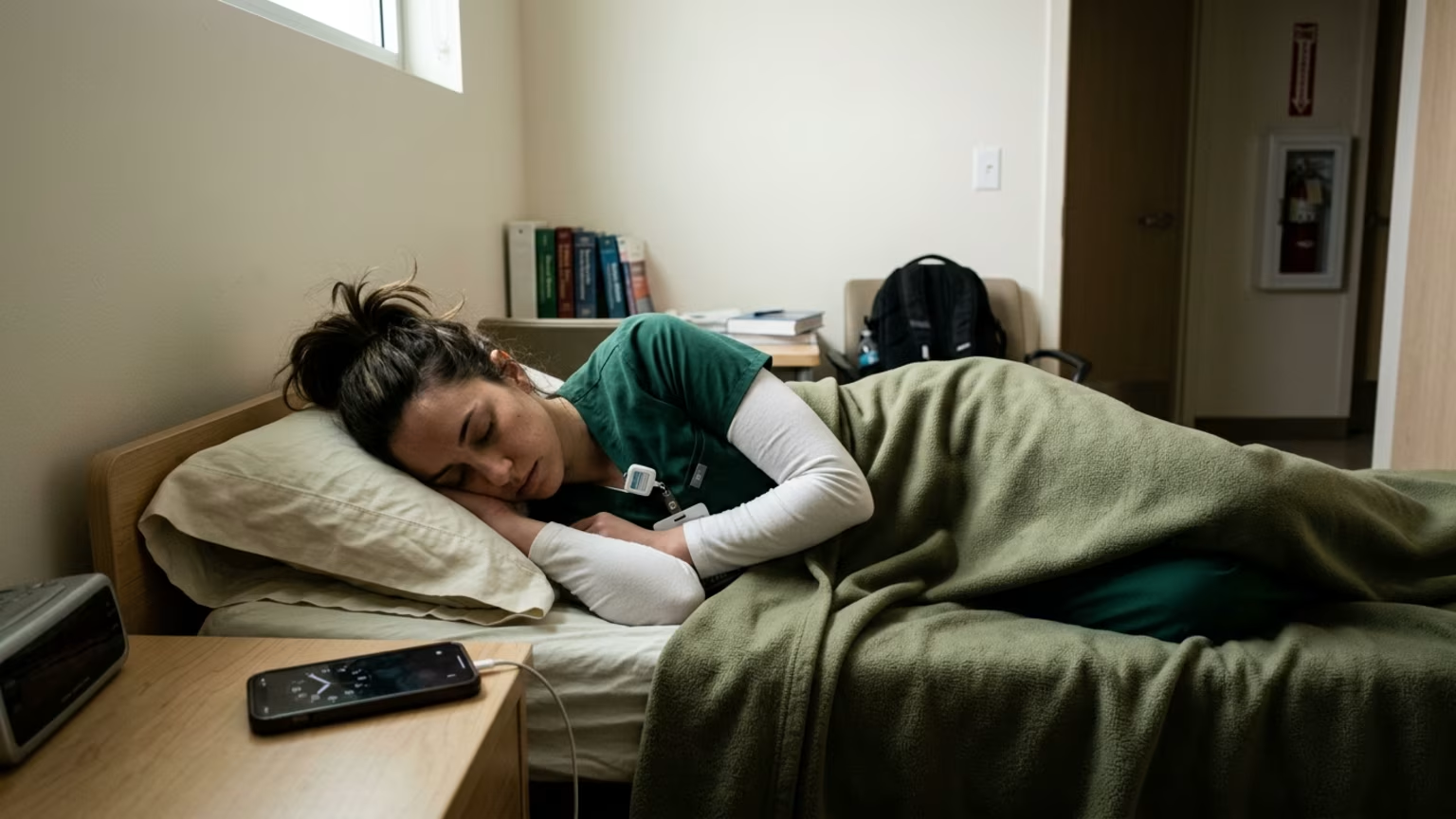

A September 2026 clinical trial shows a scheduled 30-minute nap opportunity improved simulated crisis performance and leadership skills after a 24-hour shift.





In September 2026, a randomized controlled trial published in the journal Anesthesiology examined how scheduled rest impacts performance. The study evaluated whether a brief nap could improve crisis simulation performance among anesthesia residents. These medical professionals had just completed a 24-hour shift designed to produce partial sleep deprivation. Researchers wanted to measure exactly how a scheduled rest period affected both technical and nontechnical medical skills under pressure.
The trial provides clear data on an issue that affects anyone working extended operations. Researchers compared a monitored nap opportunity against a control condition of quiet time without napping. Participants were tested once while rested and again after their 24-hour shift. This structured approach allowed researchers to isolate the specific impact of the rest period on simulated clinical performance.
This update matters significantly for active military personnel and veterans who manage prolonged operations. Extended shifts are a standard reality in many military and healthcare environments. However, prolonged wakefulness reliably degrades human performance across multiple cognitive domains. Understanding how to mitigate these deficits is essential for maintaining safety and capability during unavoidable sleep restriction.
A lack of sleep directly impairs the critical functions required for demanding military and medical jobs. Cognitive fatigue reduces reaction time, impairs judgment, and degrades emotional control. When service members or medical professionals operate in a sleep-deprived state, the risk of errors increases. Finding practical ways to blunt the cognitive impact of sleep loss is a priority for operational readiness.
While this specific trial focused on medical residents, the physiological response to sleep deprivation is universal. Leaders responsible for duty, watch, maintenance, or medical rotations face constant scheduling challenges. They must balance mission requirements against the physical limitations of their teams. The study offers a structured look at how brief rest periods support sustained performance.
Personnel often struggle to maintain focus during the final hours of a long shift. Providing a scheduled opportunity to rest might offer a reliable method to preserve cognitive function. This research helps clarify the material impacts of short naps on specific performance metrics. It provides a foundation for updating shift protocols across high demand professions.
The trial initially enrolled 35 medical residents to test the effects of the nap opportunity. Nineteen participants were assigned to the monitored nap group, while sixteen were assigned to the control condition. The primary analysis included 27 of these participants. After the 24-hour shift, all residents completed a cardiac arrest crisis simulation using a training manikin.
Performance was scored carefully across a range of technical and nontechnical skills. In the primary analysis, the nap group scored 14.8 points higher than controls on the overall performance scale. This overall difference represented an approximate 7.4 percent improvement in simulated clinical performance. Such a measurable difference highlights the potential value of structured rest during extended duty.
The researchers found distinct differences in how specific skill sets responded to the rest period. Nontechnical performance was 11.0 points higher in the nap group compared to the control group. The largest nontechnical improvements were reported in leadership and resource utilization. The trial did not report separate significant improvements for communication or decision-making scores.
Technical skills demonstrated a slightly different pattern during the primary analysis of the simulation. Technical skill scores tended to be better after the nap, but the difference was not statistically significant. However, exploratory analyses linked longer nap durations with improvements in several performance domains, including technical skills. These exploratory findings suggest that nap duration might influence the type of skills recovered.
The study also tracked how long participants actually slept during their scheduled break. Participants were given a 30-minute window for their nap opportunity. The 30-minute window was chosen to balance rest with practical shift constraints. Most participants successfully slept during this scheduled opportunity.
Despite the 30-minute window, the average sleep time was 22 minutes. This suggests that even brief periods of actual sleep can drive measurable improvements in performance. It provides a realistic benchmark for leaders trying to implement similar rest periods. Organizations do not need hours of downtime to see a return on cognitive recovery.
This new information aligns with and reinforces recent military health directives regarding fatigue management. The U.S. Army released updated sleep readiness guidance in September 2026. This guidance explicitly tells soldiers to use available sleep windows for rest. It warns against spending these valuable windows on phones or deferrable administrative tasks.
The Army guidance presents a short strategic nap of approximately 20 minutes as a legitimate tool for recovering cognitive function. This military recommendation closely matches the 22-minute average sleep time observed in the clinical trial. Both the military guidance and the medical study frame short naps as a practical countermeasure against sleep deprivation. By integrating these short rest periods, personnel can better navigate the demands of extended duty.
This alignment between clinical research and military doctrine supports a shift in how organizations handle sleep loss. Lead author Laura Schmidt said the findings provide initial evidence that a brief power nap could mitigate the effects of sleep deprivation. Schmidt noted that napping before or during shifts could potentially reduce fatigue and improve safety. Readers can find more information on managing physical restoration in our recovery and sleep articles.
However, the guidance strictly limits how these naps should be applied in practice. The Army guidance presents naps as a complement to adequate sleep, never as a replacement for it. The study supports scheduled naps as a possible fatigue countermeasure, not as a permanent solution for inadequate staffing. Organizations cannot use short naps to compensate indefinitely for excessive duty length or chronic sleep restriction.
Veterans and active personnel must apply this guidance with an understanding of its limits. The trial evaluated a simulated cardiac arrest scenario, not actual patient outcomes or field operations. Because the participants were medically trained residents, their response may not generalize perfectly to personnel without similar fatigue management training. It remains crucial to view tactical naps as just one component of a broader health strategy.
For individuals facing long-term sleep issues, short naps are not a medical treatment. Veterans experiencing persistent insomnia, trauma-related sleep disruption, or excessive daytime sleepiness should seek proper clinical evaluation. The cited trial does not evaluate treatments for sleep disorders. You can review broader strategies for maintaining healthy habits in our military health articles.
Rest must be treated as a critical component of readiness rather than a sign of reduced commitment. Personnel should deliberately manage their available sleep windows to maintain their capability. A monitored nap window of approximately 30 minutes serves as a practical starting point supported by current evidence. For more resources on managing operational stress, review our materials on sleep, stress and resilience.
The American Society of Anesthesiologists characterized these findings as preliminary evidence. Accompanying editorialists Manuel C. Pardo Jr. and Matthew B. Weinger described the study as generating an important hypothesis for fatigue management. They emphasized the need for future prospective trials examining realistic fatigue countermeasures in high stress practice. As research continues to quantify the operational cost of fatigue, will future military and veteran healthcare guidelines mandate protected nap rotations for all extended shifts?
Follow BattleVet for practical guidance on military and veteran health, strength, recovery, testosterone, sleep and healthy aging. Stay connected for new articles, research backed insights and clear information to help you stay capable for the years ahead.


CDP highlighted an MDMA therapy review and Army suicide-risk prediction research. Here is how to interpret the findings and their implications for care.


Hims expanded its testosterone program. Here are the product-status, monitoring and fertility questions relevant to veterans comparing care.

An Air Force veteran’s Apple Watch alert prompted medical evaluation. Learn what the reported case means for sleep testing and clinical care.
Build better habits around strength, recovery, sleep, hormones and healthy aging with practical guidance for active military personnel and veterans.
Explore BattleVet