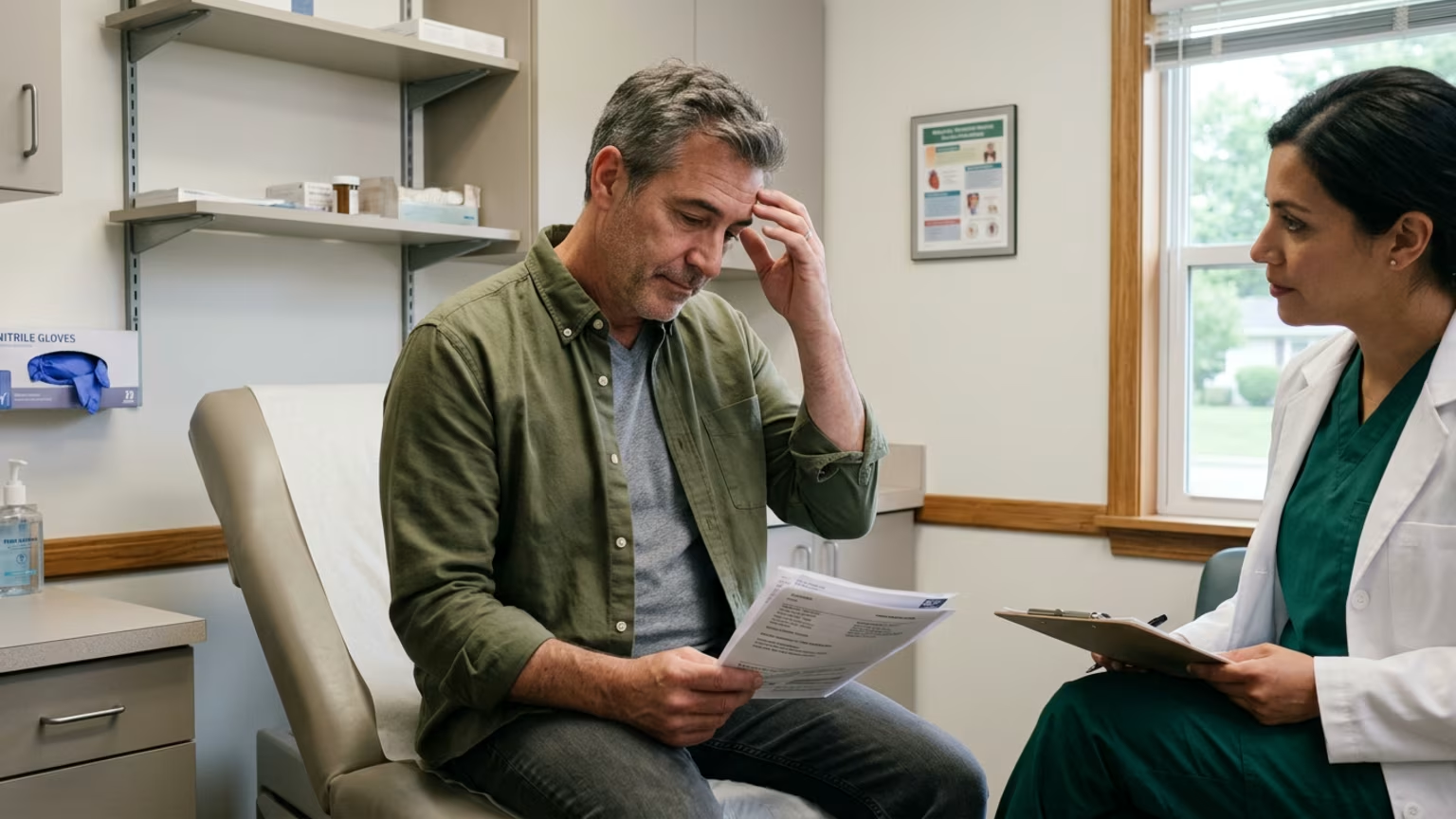

A breakdown of Pentagon toxic exposure claims, the proposed Susan E. Lukas Act, and how veterans can properly document symptoms for VA disability processes.





If you are in immediate danger, call 911. For 24/7 support, call or text 988 and press 1 for the Veterans Crisis Line, or text 838255.
In September 2025, Representative Suhas Subramanyam introduced the proposed Susan E. Lukas 9/11 Servicemember Fairness Act. The legislation centers on Susan E. Lukas, an Air Force major who worked in the Pentagon's Office of Legislative Liaison. She was in the building when American Airlines Flight 77 struck on September 11, 2001. After evacuating senior commanders, Lukas returned to work inside the Pentagon on September 12.
Lukas continued her military service and later retired in 2008. The proposed legislation aiming to address her exposure remains pending in the House Veterans' Affairs Committee. The Pentagon attack killed all 64 people aboard the aircraft and 125 people inside the building. The official cleanup period for the site ended on November 19, 2001.
USA TODAY reported that thousands of people returned to work during that specific interval. Two-thirds of the building had been reoccupied by September 24, 2001. Fires and smoke remained in the building while personnel resumed their duties. Workers also faced lingering soot, debris, and jet-fuel residue.
Lukas reports persistent headaches, throat pain, breathing difficulty, and trouble swallowing pills. She also experiences muscle pain, sleep problems, low oxygen levels, and reduced exercise tolerance. In 2008, a Walter Reed physician diagnosed her with tracheomalacia, fibromyalgia, and sleep apnea. Tracheomalacia involves weakening or softening of the tracheal wall, which can cause the airway to collapse during breathing.
Lukas states that her symptoms affect her daily life. She requires medication, supplements, topical treatments, and home air-purification equipment. The Department of Veterans Affairs has not determined that her health problems resulted from the terrorist attack. Lukas describes severe exposure and serious long-term symptoms, but current laws do not automatically link her conditions to the cleanup.
The central distinction remains between general exposure, diagnosed illness, and legally established service connection. Without a presumptive service connection, veterans face strict documentation requirements to prove their specific cases. The 2022 PACT Act expanded VA health care and disability benefits for veterans exposed to burn pits, Agent Orange, and other military hazards. VA materials state that the PACT Act added more than 20 presumptive conditions for certain toxic exposures.
The PACT Act also expanded health-care eligibility for veterans from several service eras. However, USA TODAY reported that the PACT Act did not cover this category of Pentagon worker. The proposed bill aims to address this specific group of veterans by establishing new legal guidelines.
The Reserve Organization of America estimates that more than 3,000 people may have been exposed while working in the Pentagon between September 12 and November 19, 2001. This figure is an organizational assessment rather than a government-confirmed exposure count. The organization argues that cutting through damaged wood, slate, and concrete may have generated silica-containing dust. They suggest that dust inhalation could have caused permanent lung damage for personnel present.
This claim represents the organization's position rather than a definitive peer-reviewed medical finding. Matthew Schwartzman of the Reserve Organization of America provided additional figures to USA TODAY regarding benefit applications. Schwartzman stated that the VA identified 6,457 veterans assigned to the Pentagon during the cleanup period who had filed at least one potentially related disability claim. He noted that those veterans submitted more than 31,000 claims overall.
Of those submissions, 11,705 claims had been denied. These numbers were presented by Schwartzman and the organization without independent auditing. Environmental sampling from the site presents a complex picture of the working conditions. A 2012 Centers for Disease Control and Prevention report showed that most sampled contaminants were below occupational-health or environmental standards.
However, the report also found that some lead and asbestos samples exceeded healthy limits. The available sampling details do not establish a specific cause for the illnesses reported by Lukas. The data also cannot determine the exact dose, duration, or medical effect experienced by every individual worker.
The decision to return personnel to the building generated debate even during the initial recovery phase. Arlington County Fire Chief Edward P. Plaugher opposed the decision to return workers to the Pentagon at the time. He cited concerns that gases and debris from the fire could spread through the building. Former Defense Secretary Donald Rumsfeld stated that the government needed to resume operations immediately.
Rumsfeld also acknowledged that safety could not be guaranteed for returning personnel under those circumstances. Other recovery programs from the same era highlight ongoing policy differences. The World Trade Center Health Program provides no-cost treatment for eligible responders and New York City survivors. USA TODAY reported that Pentagon personnel who returned to work inside the building were not included in that same recovery category.
Representative Morgan Luttrell criticized the exclusion of these Pentagon workers from broader compensation efforts. He noted they were among the first people exposed at the scene apart from those directly caught in the attacks. Schwartzman argues that Pentagon personnel who returned to work during the cleanup were left out of existing benefit structures. He stated that the proposed bill could encourage affected veterans to come forward with their health concerns.
The proposed Susan E. Lukas 9/11 Servicemember Fairness Act would create a presumption that certain medical conditions were related to service at the Pentagon during the cleanup. If enacted, the bill would cover asthma and chronic obstructive pulmonary disease. The presumption would also include emphysema, tracheomalacia, and cancer. Cardiovascular disease, skin disease, and other respiratory illnesses would also be covered.
Qualifying veterans could become eligible for VA treatment of service-connected conditions without having to prove causation under ordinary rules. They could also receive monthly disability compensation for those specific conditions. Currently, VA official James Smith II stated during a congressional hearing that the VA did not support the bill. Smith explained that the proposed list of covered conditions was too broad for approval.
He also testified that additional research was needed to determine precise causation for these illnesses.
Veterans experiencing a mental health crisis or thoughts of self-harm require immediate assistance. If in immediate danger, call 911, dial 988 and press 1 for the Veterans Crisis Line, or text 838255. Safe storage of medications and firearms should be arranged alongside a clinician or trusted individual. Severe breathing difficulty, chest pressure, or low oxygen also require immediate medical attention.
Establishing a firm safety and medical plan forms the critical first step in managing complex health conditions. Because the Pentagon bill is not current law, veterans must navigate the existing claims process carefully. The broader policy trend is moving toward recognizing toxic exposure as a routine part of veteran health care. The VA states that the PACT Act requires toxic-exposure screening for every veteran enrolled in VA health care.
Enrolled veterans can receive this screening to document possible exposures in their medical records. The VA notes that this screening helps inform the broader health-care team about potential risks. Some VA facilities recommend that enrolled veterans receive an initial screening and a follow-up screening at least once every five years. Veterans navigating veteran lifestyle and healthcare needs should ensure their medical records include thorough documentation.
A veteran must clearly distinguish between a medical diagnosis and a legal conclusion about causation. A doctor might document a respiratory disorder, but a disability claim requires evidence connecting that condition to qualifying service. A diagnosis alone does not guarantee benefit approval. For a disability claim or review, VA guidance states that veterans may submit new and relevant evidence.
Claims require medical documentation showing the specific diagnosis and its exact severity. A practical record can include assignment orders, duty locations, personnel records, and contemporaneous emails. Veterans can also submit incident reports, medical visits, diagnostic testing, and treatment records. The VA specifically recognizes buddy or witness statements as potentially relevant claim evidence for establishing service connection.
Veterans also have the option to identify private or federal medical records for the VA to obtain on their behalf. Understanding these documentation standards remains essential for maintaining long-term military health. Veterans whose claims were previously denied may still have options for formal review. The VA notes that a Supplemental Claim can be supported by new and relevant evidence.
A Supplemental Claim can also be supported by a change in law, such as the implementation of the PACT Act. Eligibility for benefits depends heavily on the veteran's specific service history, location, dates, and diagnosis. Affected veterans should consider working with an accredited veterans-service organization, claims agent, or attorney. Professionals familiar with VA policies can provide case-specific advice rather than assuming proposed rules apply today.
Prioritizing thorough record keeping helps veterans build a clearer picture of their health over time. Documenting symptoms, prioritizing recovery and sleep, and participating in routine screenings support effective post-service health management. As legislative proposals aim to expand presumptive conditions for past events, how will ongoing research shape the way the VA defines service connection for future generations of veterans?
Follow BattleVet for practical guidance on military and veteran health, strength, recovery, testosterone, sleep and healthy aging. Stay connected for new articles, research backed insights and clear information to help you stay capable for the years ahead.


A Cureus review links preoperative TRT with selected knee replacement complications. Learn what the findings mean for veterans' surgical discussions.


VA research raises questions about suicide-screening answer accuracy and supports clearer conversations, trust, and broader clinical assessment.
JAMA estimates low testosterone readings in active-duty Army men. See the threshold data, study limits, and implications for clinical follow-up.
Build better habits around strength, recovery, sleep, hormones and healthy aging with practical guidance for active military personnel and veterans.
Explore BattleVet