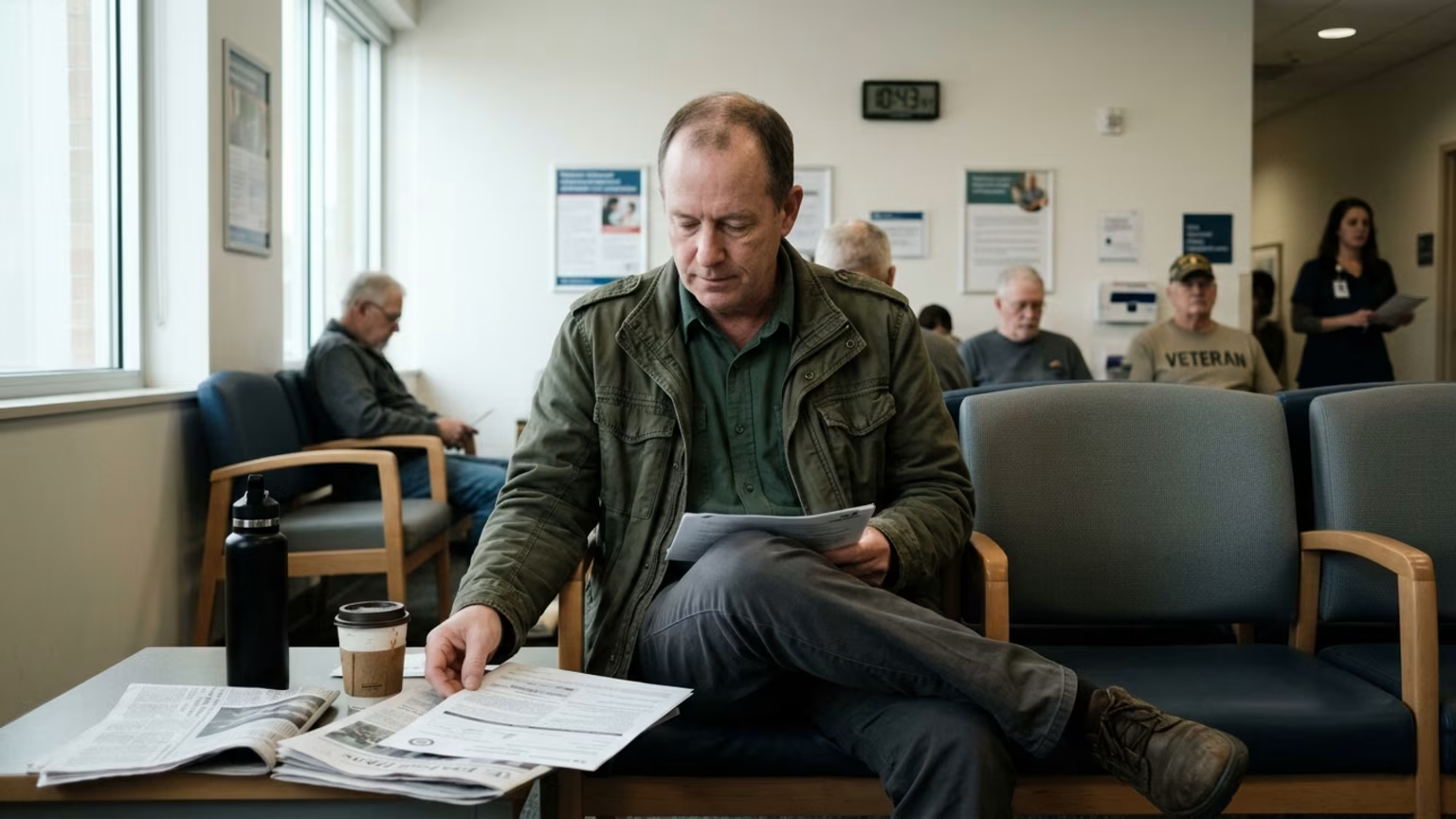

Learn about the proposed Take Care of America’s Veterans Act, which aims to reform VA wait times, PTSD care, community care access and caregiver support.





If you are in immediate danger, call 911. If you need immediate support, dial 988 and press 1 to reach the Veterans Crisis Line. You can also text 838255 for confidential help.
In September 2026, the Washington Examiner reported on the Take Care of America’s Veterans Act. This proposed federal legislation combines more than 62 provisions targeting mental health, healthcare access, and brain health. The bill was introduced in June and seeks to address military-to-civilian transition assistance alongside family and caregiver support. The Washington Examiner notes that most of the provisions are bipartisan.
The proposed legislation has not yet been enacted into law. It remains awaiting congressional action and has not received presidential approval. The bill includes specific measures aimed at women veterans as well as rural and underserved veterans. More than 20 military and veteran organizations currently support the legislation according to the Washington Examiner.
Timely access to healthcare remains a central issue for the military community. A transition to civilian life often involves navigating complex VA processes. Veterans relying on the VA system need reliable timelines for primary and specialty care appointments. The military health infrastructure often shapes how active personnel view their future care options.
The sheer size of the proposed legislative package reflects the complexity of the medical system. Consolidating 62 provisions into one bill shows an attempt to fix multiple interconnected issues simultaneously. Addressing mental health without also fixing appointment delays often leads to incomplete patient care. By grouping these priorities, lawmakers acknowledge that veteran health requires a comprehensive approach.
The Washington Examiner highlights a fundamental tension between centralized VA facilities and community-based treatment options. Veterans dealing with traumatic brain injuries cannot afford to wait weeks or months for proper evaluation. Delays in care directly affect physical recovery and long-term capability. The proposal treats caregiver employment and reemployment as part of the broader veteran support system.
Financial stability is another critical component of overall veteran health. Medical retirements and disability compensation heavily influence daily living standards. Caregivers often set aside their own employment to assist family members. You can find more information about these distinct lifestyle challenges in our veteran life articles.
The Washington Examiner shared specific data regarding the scope of the proposed changes. The legislation could affect more than 32 million individuals. This total includes veterans, service members, family members and caregivers. A large portion of this population includes those managing ongoing mental health conditions.
The statistics highlight significant differences between stated goals and actual patient experiences. Official VA access standards call for primary-care, specialty-care, and mental-health appointments within 20 to 28 days. However, the Washington Examiner cites an average wait of 76.3 days for neurology appointments. Furthermore, veterans at some facilities wait more than five months for mental-health treatment.
The reported 76.3-day average wait for neurology appointments requires careful consideration. The Washington Examiner article does not provide a nationwide methodology for this exact number. It does not explain whether the figures represent initial scheduling delays or completed visits. Understanding how these metrics are calculated is essential for evaluating system performance.
Mental health wait times exceeding five months often depend on the particular facility involved. Geographic location plays a massive role in whether a veteran can see a specialist quickly. Rural areas often lack the necessary infrastructure to support rapid appointment scheduling. These specific regional disparities explain why rural and underserved veterans receive dedicated attention in the proposal.
The scale of the populations involved shows why healthcare administration remains a massive logistical challenge. Managing the healthcare needs of 1.7 million veterans with PTSD demands specialized clinicians. The article reports that more than 1.7 million veterans live with PTSD. These numbers illustrate the heavy burden placed on current VA infrastructure.
Survey data indicates strong interest in reform among former service members. A Mission Roll Call survey cited by the Washington Examiner found that 92 percent of veterans supported timely VA healthcare access standards. The same survey found that 71 percent of veterans supported the broader legislative package. Jim Whaley, a 20-year Army veteran and CEO of Mission Roll Call, wrote the Washington Examiner article detailing these findings.
The Major Richard Star Act is a notable component of the larger legislative package. This specific provision addresses an offset affecting nearly 60,000 medically retired combat-injured veterans. It would allow eligible veterans who medically retire before completing 20 years of service to receive full military retirement pay alongside VA disability compensation. This provision specifically targets financial support rather than general healthcare access.
Veterans should base their current health decisions on existing VA protocols rather than pending legislation. Since the Take Care of America’s Veterans Act is only proposed, it does not immediately change appointment options. You should continue scheduling appointments and managing referrals through standard VA channels. Understanding your current eligibility remains the most effective way to secure timely treatment.
The proposed Veterans ACCESS Act aims to clarify when treatment can be obtained outside the VA system. It seeks to make it easier for veterans to obtain care through both VA facilities and the Veterans Community Care program. However, expanded community care eligibility alone may not resolve underlying capacity problems. The Washington Examiner links current access issues to staffing shortages, provider quality, and healthcare infrastructure.
The debate over community care versus internal VA care has shaped policy for years. The Veterans ACCESS Act represents the latest effort to strike a balance between these two systems. Clearer rules would theoretically prevent veterans from getting stuck in administrative holding patterns. Knowing exactly when you qualify for an external doctor reduces frustration during the scheduling process.
Veterans seeking care should distinguish between current treatment options and potential future changes. The article does not provide current official community care eligibility details. You must rely on standard VA documentation to understand your present rights. Proceeding with your existing healthcare plan remains the safest course of action.
The Honor Our Promise to Veterans Act is designed to address these systemic infrastructure challenges. It targets appointment delays and the structural requirements needed for more timely care. Veterans evaluating their long-term veteran lifestyle and healthcare options should monitor how these capacity problems are addressed. Clearer standards would help patients understand exactly when they qualify for outside providers.
The proposed reforms pair PTSD concerns directly with traumatic brain injury treatment. The BEACON Act would expand coverage for providers assisting veterans with mild-to-moderate traumatic brain injury. Veterans facing complex neurological symptoms could see expanded provider options if the bill passes. Currently, patients must rely on available VA specialists or established community care exceptions.
It is crucial to remember that veterans face a suicide risk disproportionately higher than that of the civilian population. If you are experiencing suicidal thoughts, you must utilize existing emergency services immediately. The pending legislation represents future policy development rather than a substitute for immediate care. Always prioritize immediate medical intervention over waiting for legislative changes.
The Veteran Caregiver Reeducation, Reemployment and Retirement Act is another major component of the package. Identified as the 3R Act, it connects caregiver support to family financial stability. The Washington Examiner does not provide detailed eligibility rules, benefit levels, or implementation procedures for this act. Former service members planning a return to work should watch for further legislative details regarding reemployment assistance.
Caregivers should pay attention to how the final legislation distributes financial resources. Grouping caregiver employment and veteran treatment together makes the proposed funding process very complex. Patients need to know if benefits will go directly to caregivers or veterans. Without these operational details, it is impossible to predict how the 3R Act will function.
Military-to-civilian transition assistance requires a structured approach to be effective. Leaving active duty involves replacing centralized military healthcare with a patchwork of civilian and VA systems. The Take Care of America’s Veterans Act attempts to streamline this difficult transition period. Connecting retiring personnel with established community resources could improve long-term outcomes.
Additional provisions are intended to support families and survivors. The article identifies the Sharri Briley and Eric Edmundson Veterans Benefits Expansion Act as part of the package. The Love Lives On Act is also included to provide greater financial stability for caregivers. Families should pay attention to whether final legislative language separates support for veteran clinical treatment from caregiver employment planning.
Veterans and advocacy groups must evaluate the practical implementation of these proposed reforms. The Washington Examiner article notes concerns involving the federal budget process and VA disability claim evaluations. Any legislative package must secure appropriate funding to be effective. Clear funding mechanisms are required to support expanded community care options.
Several key questions remain unanswered regarding the final design of the legislation. Patients need to know what the enforceable appointment deadlines will actually be. They also need clarity on who pays for outside treatment and how staffing shortages will be resolved. Until these details are finalized, veterans should maintain their current health management routines. You can visit BattleVet for continued updates on military health topics.
As Congress debates the Take Care of America’s Veterans Act, the implementation details will dictate its actual success. Expanded access standards mean very little without the required infrastructure and specialized providers to support them. The integration of community care with centralized VA facilities continues to be a complex administrative challenge. How will the VA ultimately balance the demand for immediate external care against the need to rebuild its own internal specialist capacity?
Follow BattleVet for practical guidance on military and veteran health, strength, recovery, testosterone, sleep and healthy aging. Stay connected for new articles, research backed insights and clear information to help you stay capable for the years ahead.


An Air Force veteran’s Apple Watch alert prompted medical evaluation. Learn what the reported case means for sleep testing and clinical care.


The Fort McClellan veterans health study is planning its analysis. Learn who is covered, how the research will work, and what it means for care.
A Cureus review links preoperative TRT with selected knee replacement complications. Learn what the findings mean for veterans' surgical discussions.
Build better habits around strength, recovery, sleep, hormones and healthy aging with practical guidance for active military personnel and veterans.
Explore BattleVet