
On August 31, 2026, the Pentagon codified new military fitness and body-composition regulations. Learn how testing, scoring and daily training rules will change.





On August 31, 2026, the Pentagon published new military fitness and body-composition regulations across all military services. These updated rules replace the previous 2022 fitness policy. They also incorporate specific directives issued throughout 2025. The regulations establish common requirements for testing schedules, combat-arms performance standards and body-composition assessments.
The codified framework creates new protocols for active-duty testing and reserve requirements. It sets baseline postpartum testing exemptions across all branches. The policy outlines commander responsibilities for providing daily training time. It also mandates new longitudinal data reporting systems to track demographic performance.
This update matters for active-duty personnel because it alters how the military evaluates physical readiness. The policy formally separates general fitness testing from specialized combat readiness assessments. According to Military Times, active-duty troops will now take one regular service fitness test and one combat readiness test each year. National Guard and Reserve members will face one annual fitness test.
The distinction between combat and non-combat roles shapes the entire testing structure. The policy follows a March 2025 directive from Defense Secretary Pete Hegseth. Hegseth instructed the services to identify combat-arms specialties and develop mission-related physical standards. He previously criticized "fat troops" and pledged to return combat positions to the highest male standard only.
Under the new rules, personnel in designated combat-arms roles will be evaluated against male-based standards on their regular service fitness tests. Service members in non-combat roles will continue to receive sex-based and age-based scoring. This creates two distinct administrative tracks for military physical performance. The separation aims to standardize baseline expectations for front-line occupations.
The policy unfolded alongside a Pentagon review of women in front-line military jobs. Military Times notes that this review was transferred to Johns Hopkins’ Applied Physics Laboratory. It was placed under a researcher involved in a controversial 2015 study. Hegseth had previously cited that specific study in arguments concerning women serving in combat jobs.
However, the current reporting does not establish that the new fitness rules are directly based on that 2015 study. The available coverage does not provide an independent exercise-physiology evaluation of the policy. There is no quoted medical organization verifying how these standards will impact injury rates. The data system is entirely prospective, meaning effects on retention or readiness cannot yet be determined.
For service members balancing operational duties, the regulations establish new guidelines for training access. Commanders must allow service members to perform physical-fitness training every duty day. This makes scheduled training time a formal command responsibility rather than a purely individual burden. The policy includes a mission-readiness exception, but the baseline expectation supports consistent physical preparation.
The published regulations include specific operational metrics that dictate how the services will assess readiness. While the Pentagon sets the broad baseline, individual branches maintain flexibility. They can design specific tests that meet these standardized criteria. The overarching framework mandates precise body composition limits and testing frequencies.
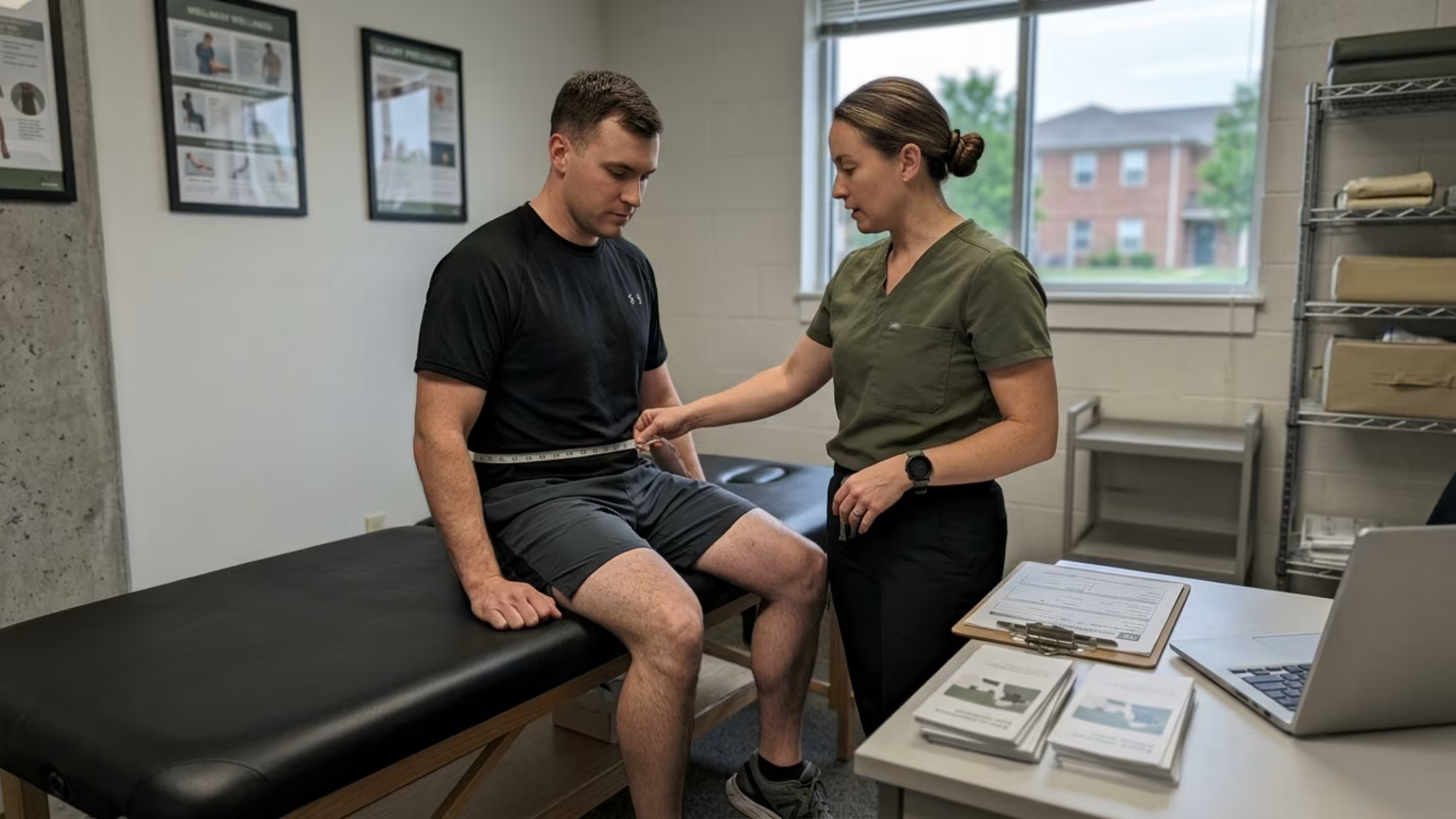
Active-duty personnel will undergo body-composition testing twice per year. Guard and Reserve members will complete this assessment once annually. The primary screening metric is a straightforward waist-to-height ratio. All service members must maintain a ratio below 0.55, which is calculated by dividing waist circumference by height.
The policy outlines specific scoring targets for the combat-arms population. The regulations identify more than 80 combat-arms occupations across the Army, Navy, Marine Corps and Air Force. These roles include infantry, armor and artillery. They also feature certain engineering positions and special operations roles.
Military Times reports that no Space Force occupations are listed as combat arms under this policy. Personnel in these designated specialties face strict scoring requirements. They must achieve an average score of 70 percent across events on their regular service tests. This 70 percent requirement must be achieved using the specified male-based standards.
The framework also mandates specific timelines for postpartum physical recovery. Service members receive a minimum 12-month testing exemption after childbirth, miscarriage or stillbirth. This provides a guaranteed baseline recovery window before testing resumes. Medical documentation can further extend this timeframe if health conditions require it.
The regulations mandate a comprehensive data collection system for monitoring long-term strength and physical capability trends. Services must retain electronic records of test results throughout a member's career. Beginning on June 1, 2027, each branch must submit detailed reports to the Pentagon. The reports must track results by sex, age and race.
The submitted data will also be categorized by ethnicity, rank and military specialty. Furthermore, the services must explain the scientific basis used to develop their standards. This reporting mandate creates a system for tracking career performance over time. It establishes a foundation for analyzing how different demographics respond to the new metrics.
These administrative shifts require troops to adjust their approach to daily physical preparation and performance routines. The separation of tests means generic physical fitness routines are no longer adequate. First, personnel must align their physical training with their specific occupational testing format. Combat-arms members will take a Combat Field Test developed by their service.
Those outside designated combat specialties will generally take a Combat Readiness Test. However, individual services might use a regular fitness test instead of a specific combat readiness evaluation. Service members must consult official service guidance once it becomes available. They must train for the precise demands of their required occupational test.
Second, troops must understand the practical function of the 0.55 waist-to-height ratio. This number is an initial screening metric rather than a final judgment of fitness. Exceeding the threshold triggers a service-specific body-fat assessment. Only those who fail that secondary evaluation will enter a remedial program.
Troops should monitor their body composition proactively. They should remember that military branches can impose stricter requirements than the Pentagon baseline. Third, active-duty members should utilize the new policy to establish consistent physical conditioning routines. The daily-training provision gives personnel a solid policy basis for requesting regular fitness time.
Members should consult their chain of command regarding how units will schedule this training. Consistent conditioning is critical for passing multiple annual assessments and maintaining proper physical restoration and sleep hygiene. While mission requirements can override the rule, the directive supports a culture of daily readiness. Troops should prioritize organized recovery to handle the increased testing frequency safely.
For postpartum service members, the rules create a predictable administrative recovery window. The 12-month exemption provides time to rebuild foundational strength. Healthcare providers can recommend extending this exemption based on individual medical needs. Postpartum personnel should prioritize medical documentation if their health requires more recovery time.
The policy outlines administrative testing exemptions but lacks a clinical return-to-training protocol. Because of this gap, individualized medical guidance remains essential for safe physical restoration. Former service members navigating the transition into civilian health routines must view these regulations with proper context. These Pentagon rules apply strictly to current military organizations as administrative readiness standards.
Veterans should not assume the 0.55 ratio represents a universal medical definition of longevity. The male-based scoring metrics are occupational benchmarks rather than comprehensive health indicators. The policy is a readiness standard, and outcome data will not be reported until 2027. Veterans returning to training should obtain clinical healthcare advice rather than adopting military testing parameters.
The Pentagon has formally standardized its readiness testing schedules and combat performance frameworks. However, the long-term clinical outcomes of these new administrative policies remain unmeasured. As branches compile career-spanning electronic records, will the reports starting in 2027 validate these standards for improving active-duty health, or will the data reveal a need for further medical refinement?
Follow BattleVet for practical guidance on military and veteran health, strength, recovery, testosterone, sleep and healthy aging. Stay connected for new articles, research backed insights and clear information to help you stay capable for the years ahead.


Hims expanded its testosterone program. Here are the product-status, monitoring and fertility questions relevant to veterans comparing care.


An Air Force veteran’s Apple Watch alert prompted medical evaluation. Learn what the reported case means for sleep testing and clinical care.

The Fort McClellan veterans health study is planning its analysis. Learn who is covered, how the research will work, and what it means for care.
Build better habits around strength, recovery, sleep, hormones and healthy aging with practical guidance for active military personnel and veterans.
Explore BattleVet