

A preclinical study reveals how rare Sst-Chodl neurons actively drive sleep. Learn what this neuroscience means for veteran health and natural recovery.





On September 9, 2026, the journal Nature published new research identifying a specific class of neurons that actively promote sleep. The study focused on a rare group of cortical inhibitory cells known as Sst-Chodl neurons. According to a Medical Xpress report, these neurons can synchronize activity across broad areas of the mouse neocortex. When researchers artificially activated these cells, the mice fell asleep more readily. They also spent more time sleeping overall.
The research paper is titled “Neocortical long-range inhibition promotes cortical synchrony and sleep.” It lists Jacob M. Ratliff and his colleagues as the authors. The study challenges the traditional idea that the cortex merely follows sleep signals generated in deeper brain areas. Lead researcher Renata Batista-Brito stated that the cortex is often viewed as a passive follower during sleep. However, these findings show that cortical circuits can actively drive and synchronize sleep-associated activity.
For active military personnel and veterans, this basic science underscores that sleep is a highly active biological state. The brain does not simply turn off when we rest. Instead, specific neural circuits work aggressively to organize the synchronized electrical rhythms required for physical and cognitive restoration. Understanding this active process reinforces why forcing wakefulness cannot replace genuine recovery.
The Military Health System explicitly includes sleep among its primary focus areas. Sleep sits alongside mental health, physical fitness, and cognitive performance within the Department of Defense Warfighter Performance Optimization and Total Force Fitness initiatives. These efforts are designed to support operational readiness, long term health, and sustainable recovery for service members.
The Military Health System identifies research and education resources intended to translate scientific findings into practical guidance. This translation effort helps service members and their families apply new knowledge effectively. That broader context makes fundamental neuroscience studies highly relevant to our military health readers. However, it is crucial to recognize the scope of the current study. The research did not test deployment schedules, shift work, combat exposure, or human operational performance.
The immediate value lies in understanding the foundational biology of rest. I remember waking up after a poor night of sleep and realizing that my training recovery was taking much longer than it used to. I realized that readiness is more than just pushing through the fatigue. It requires a dedicated approach to sleep and hormonal health, which completely shifted how I view long term capability. When we view sleep as an active biological function rather than just a period of inactivity, prioritizing it becomes a clear operational requirement.
While the recent experiments were performed in mice, the underlying biology holds broader interest. The Medical Xpress report notes that these specific cells have been preserved across multiple evolutionary lineages. This conservation spans amphibians, reptiles, and humans. However, the exact function of Sst-Chodl neurons in humans remains unknown. The researchers do not yet know if these neurons perform the identical sleep promoting function in people.
Readers looking for practical resources on these topics can review our articles on military health. Maintaining physical capability requires respecting the body's natural recovery mechanisms.
The Medical Xpress report provides specific statistical and functional details about how Sst-Chodl neurons operate. These cells are exceptionally rare within the brain. They make up roughly 0.2 percent of all cortical neurons.
Despite their extreme scarcity, these neurons possess a unique structural advantage. They differ from many other inhibitory neurons because they send signals over long distances. Most inhibitory cells communicate primarily with nearby neighbors. This long range capability allows the Sst-Chodl neurons to influence and synchronize broad areas of the neocortex simultaneously.
The synchronization of the brain is a massive logistical effort. By sending long range inhibitory signals, Sst-Chodl neurons act like biological coordinators. This wide reaching influence is necessary to slow down the fast, chaotic electrical activity of a waking brain. The researchers closely monitored the natural activity of these cells in the mice.
They observed that the neurons remained relatively quiet when the animals were awake and alert. However, their activity increased significantly as the mice became drowsy. The cells became highly active as the animals entered deep non-rapid eye movement sleep. This stage is also known as NREM sleep.
During this transition, the increased activity of the Sst-Chodl neurons coincided precisely with the slow electrical rhythms characteristic of sleep. When the scientific team stepped in to activate these neurons artificially, the electrical activity across the entire neocortex changed. It became slower and much more synchronized. This artificial activation produced brain wave patterns that closely resembled natural sleep activity.
These data points demonstrate that the cortex contains built in circuitry capable of organizing large scale neural synchronization. Batista-Brito noted that these neurons do not merely become active after sleep begins. The findings indicate that they actively help drive the transition toward sleep itself.
This neuroscience research reinforces current medical guidance regarding natural sleep processes. The study clearly demonstrates how artificial activation affected cortical activity in mice. However, it does not provide a human diagnostic test, performance intervention, or medication target.
Because this mechanism is not yet a human treatment, veterans should rely on established clinical protocols. There is no evidence that behavioral techniques, supplements, or consumer products can selectively activate Sst-Chodl neurons in people. The study does not justify self experimentation with unproven methods.
The researchers suggested that these neurons might help the brain respond to accumulated sleep pressure. They noted that this remains an open hypothesis requiring further testing. The study does not prove that Sst-Chodl neurons measure sleep debt. It also does not determine when a person or a mouse strictly has to sleep.
For service members, the most practical step is to protect opportunities for natural sleep. Personnel should follow established unit, medical, and occupational health guidance for managing fatigue. The findings emphasize that sleep drive is rooted in active brain circuitry. Behaviors that support these natural processes remain the most effective way to maintain readiness.
Veterans experiencing persistent sleep problems should seek professional assessment. The new findings do not replace established sleep care. The Medical Xpress report explicitly states that researchers do not yet know how this circuit functions when sleep is disrupted. They also do not know if changes in these neurons contribute to sleep disorders.
Veterans with suspected sleep apnea, severe daytime sleepiness, or trauma related sleep problems should not delay clinical evaluation. VA guidance advises veterans concerned about their sleep to discuss the issue with a primary care clinician. This conversation can lead to a formal evaluation and a possible referral for a sleep study when appropriate.
When clinical insomnia is the diagnosed problem, VA materials point to specific, structured treatments. Cognitive behavioral therapy for insomnia is described as a first line treatment. This approach is commonly known as CBT-I.
VA resources detail CBT-I as a short term treatment that focuses on modifying habits. It targets specific sleep related behaviors and thoughts rather than relying primarily on medication. This behavioral approach helps veterans rebuild natural sleep patterns safely.
VA researchers have continually studied digital and telehealth approaches to improve access to treatments like CBT-I. These efforts include providing care for veterans who manage co-occurring psychiatric conditions alongside their insomnia. While these clinical treatment developments are separate from the recent mouse neuroscience findings, they represent the practical side of sleep medicine.
The scientific community is working to understand the biology of sleep in the lab. Simultaneously, the medical community is working to deliver effective behavioral treatments to the veteran population. You can find more comprehensive information in our sleep, stress and resilience resources.
The identification of Sst-Chodl neurons provides a plausible biological mechanism for coordinated cortical activity during sleep. As researchers continue to map the circuits that drive deep rest, will these preclinical findings eventually guide the development of targeted, non-medication interventions for veterans with clinical insomnia?
Follow BattleVet for practical guidance on military and veteran health, strength, recovery, testosterone, sleep and healthy aging. Stay connected for new articles, research backed insights and clear information to help you stay capable for the years ahead.



A 2026 study reveals that rural veterans discharged from VA hospitals face lower readmission rates but a 20 percent higher risk of short term mortality.

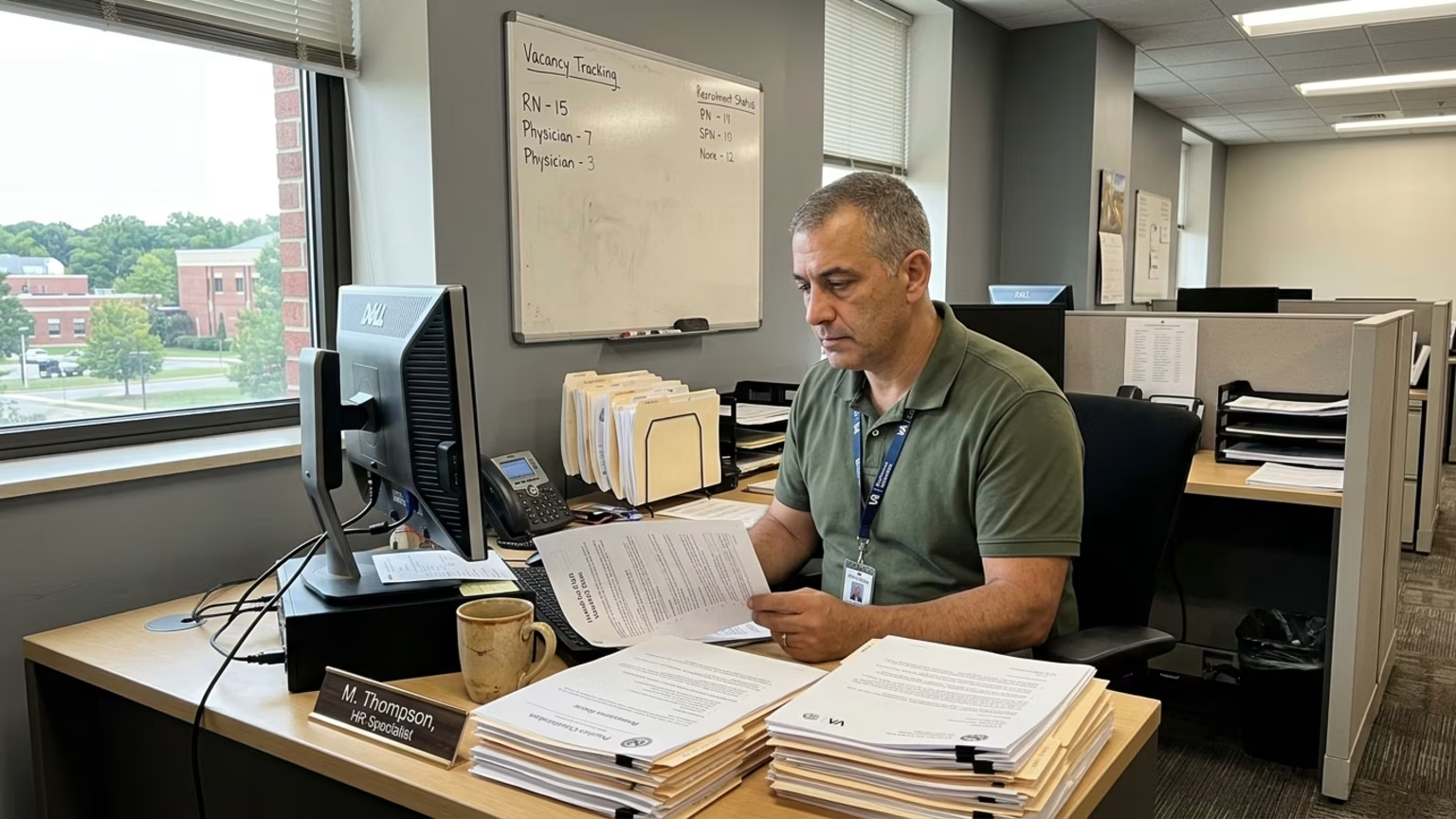
A 2026 OIG review identifies severe staffing shortages across 139 VA health facilities, impacting mental health and nursing roles. Plan your care proactively.

The Marine Corps adopted sex-neutral fitness grading for combat roles. Early data shows over 91% of tested female Marines passed the 210-point minimum.
Build better habits around strength, recovery, sleep, hormones and healthy aging with practical guidance for active military personnel and veterans.
Explore BattleVet