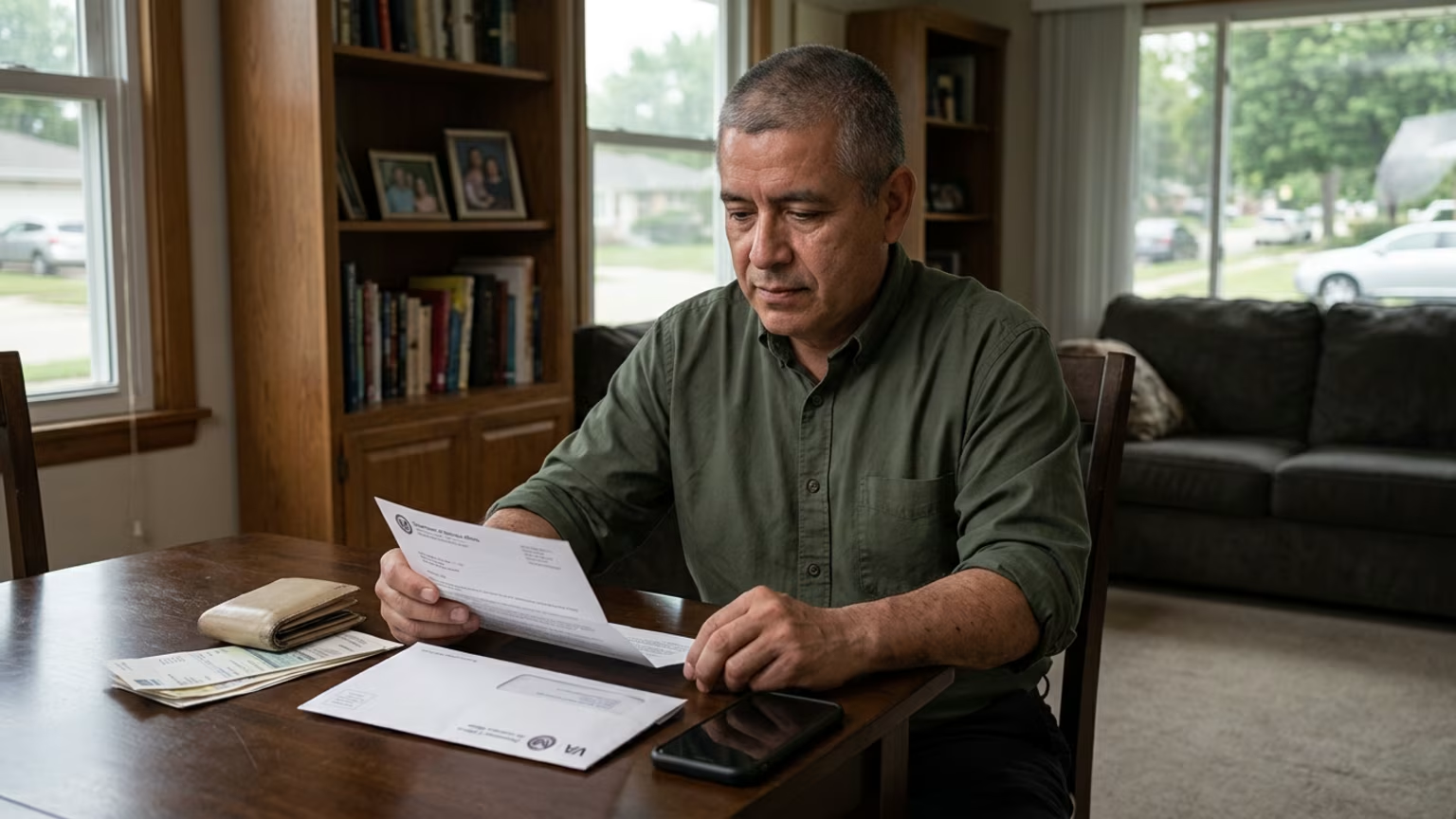

A review of Executive Order 14426, which directs automatic sharing of military records to potentially reduce the wait for initial VA disability payments.





On September 8, 2026, President Trump reportedly signed Executive Order 14426. This directive instructs the Department of War and the Department of Veterans Affairs to automatically share military personnel and treatment records. According to a NewsBreak report on the order, the system will begin sharing records when a service member enlists and continue for as long as the person receives VA benefits. The specific documents included in this automated pipeline are Official Military Personnel Files, Service Treatment Records, personnel records and health records.
This policy update matters because the gap between military separation and the first disability check often creates significant household cash flow problems. Currently, the records transfer from the Department of Defense to the VA takes an average of 90 to 180 days. That transfer timeline comes from a White House fact sheet reported by FedTools. The new order attempts to remove the manual records request step that usually occurs after a veteran files a claim. By pushing files to the VA immediately, adjudicators can access vital treatment documentation much earlier in the timeline.
We know firsthand how administrative friction can impact overall readiness and health. As one of our team members noted, "I remember waking up after a poor night of sleep and realizing that my training recovery was taking much longer than it used to. I realized that readiness is more than just pushing through the fatigue. It requires a dedicated approach to sleep and hormonal health, which completely shifted how I view long term capability." When transitioning veterans have to spend their limited energy fighting for medical records, they have less time to focus on establishing a solid recovery and sleep routine. A faster administrative process allows separating personnel to prioritize physical restoration and veteran lifestyle and healthcare adjustments instead of paperwork.
It is important to note that this change is mainly about reducing administrative delay. FedTools distinguishes between an administrative modernization effort and a benefits expansion. The order does not reportedly create a new disability benefit, change disability rating criteria or increase the amount of an approved payment. The measure strictly concerns records administration and claims processing.
The immediate highlight of the new directive is a projected reduction in wait times. The VA reportedly estimates that automatic record sharing could cut 20 to 30 days from the wait for a newly separated veteran's first disability payment. This builds on broader VA claims processing improvements. A separate report indicates that veterans recently saw their average disability decision wait fall to 76 days from 141 days.
Readers should clearly distinguish between these two different metrics. The 76 day figure concerns the overall time it takes to receive a formal disability decision. The 20 to 30 day estimate specifically concerns the time saved before a newly separated service member begins receiving their actual financial compensation. Furthermore, the 20 to 30 day figure is an agency projection rather than a guaranteed payment schedule.
The implementation of this order relies on a series of staged technology and administrative deadlines. According to FedTools, the earliest operational requirement is a 30 day deadline for sharing records upon a service member's discharge. This initial agency milestone falls around October 8, 2026. However, sources describe this 30 day requirement as an internal agency obligation rather than an immediate new application process for veterans.
The broader infrastructure build out will take significantly longer. The order reportedly mandates a 120 day deadline to review information technology contracts for interoperability. That contract review deadline lands around January 6, 2027. A larger 180 day deadline to establish a permanent records sharing pipeline and an AI assisted benefits portal will fall around March 7, 2027. The reported 180 day technology requirement means the permanent digital claims tools may not be fully operational immediately. FedTools notes that the order does not name a specific AI product, and no public technical specification is currently available.
Since the permanent infrastructure will roll out in stages extending into early 2027, separating personnel should continue using existing VA filing channels. Service members should not delay their claims while waiting for the permanent records sharing pipeline to finish construction. FedTools advises using the Benefits Delivery at Discharge process if eligible. This existing BDD option is available between 180 and 90 days before separation.
Active personnel planning to separate in late 2026 or early 2027 must still take personal responsibility for their medical evidence. You should obtain and review your Official Military Personnel File and Service Treatment Records before leaving the military. Automatic transfer systems cannot correct missing, inaccurate or incomplete records. Veterans should retain hard copies of all medical documentation, deployment records and line of duty material to support their claims.
National Guard and Reserve members need to be particularly thorough with their documentation. The reported White House material identifies Guard and Reserve personnel as an especially relevant group for these changes. Because they frequently move between active duty and civilian status, they must verify that records from multiple periods of service are complete. Checking that these documents associate correctly with your VA file is a critical step for maintaining long term military health.
The reporting does not establish that the system will automatically enroll veterans in every VA program. The primary article specifically distinguishes the new records sharing change from the VA Pension with Aid and Attendance program. It describes that pension as a separate, opt in benefit. Veterans must still actively apply for specialized programs through the appropriate channels.
The reported order also directs the Secretaries of War, Labor and Veterans Affairs to revise the Transition Assistance Program. The goal is to connect departing service members with open jobs, training programs or apprenticeships before separation where practical. Additionally, the order reportedly calls for departing troops to be connected with federal, state or local veterans representatives. These representatives can assist with health care applications, disability claims and education benefits.
Managing this transition period effectively is a critical component of healthy aging. When separating service members understand their administrative timelines, they can lower their daily stress levels. Lower stress directly supports better physical restoration and overall fitness. We consistently see that veterans who approach their administrative tasks with the same discipline they applied to their physical training experience smoother transitions.
Despite these promising administrative updates, households budgeting around separation should plan conservatively. A veteran should never assume that an automatic records pipeline guarantees payment by a particular date. Faster records transfer does not necessarily mean faster medical examinations or rating decisions. These steps represent separate stages of the claims process.
Back pay may eventually cover benefits owed after a claim is approved, but it does not eliminate the immediate cash flow problem created by waiting for the first check. Additionally, veterans who separated before the new process takes effect may continue to move through existing procedures. The reporting describes the 30 day directive as prospective, applying to future separations rather than claims already moving through the existing system.
As these federal agencies work to modernize their records systems over the coming months, will the promised AI assisted portal fundamentally streamline the claims process, or will technical integration challenges extend the timeline for bringing these new tools online?
Follow BattleVet for practical guidance on military and veteran health, strength, recovery, testosterone, sleep and healthy aging. Stay connected for new articles, research backed insights and clear information to help you stay capable for the years ahead.



An analysis of the risks tied to unnecessary testosterone therapy, covering clinical reference baselines, fertility impacts, and the dangers of unregulated use.


New 2025 to 2026 data shows an increase in past-month probable PTSD among U.S. veterans, highlighting the critical need for targeted sleep recovery protocols.
BattleVet provides a practical decision framework for veterans considering testosterone replacement therapy, covering diagnostic testing, formulations, and monitoring risks.
Build better habits around strength, recovery, sleep, hormones and healthy aging with practical guidance for active military personnel and veterans.
Explore BattleVet