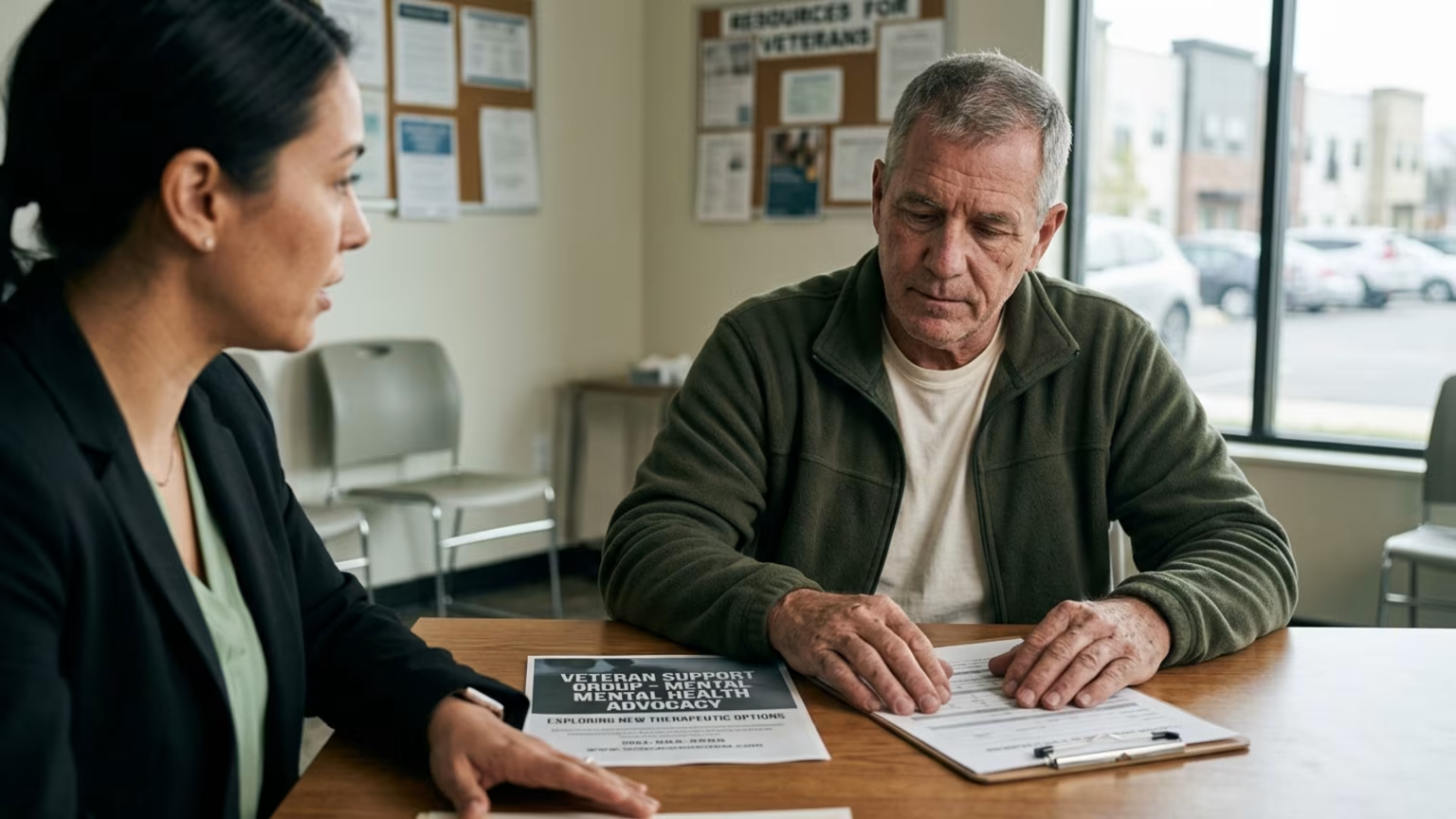

The American Legion endorsed VA-managed access to FDA-approved psychedelic treatments. Learn what this policy shift means for veteran mental health care.





If you or a veteran you know is in immediate danger, call 911. For the Veterans Crisis Line, dial 988 and press 1, or text 838255 for confidential support.
At its recent national convention in Louisville, Kentucky, the American Legion adopted a resolution to support safe veteran access to emerging mental health treatments. The resolution specifically includes psychedelic therapies through the Department of Veterans Affairs. This organizational stance insists that access must follow official regulatory approval by the FDA.
The organization endorsed the pending VHA Novel Therapeutics Preparedness Act during the proceedings. This legislation proposes an Office of Novel Therapeutics inside the VA to responsibly evaluate and research emerging treatments. This legislative proposal aims to bridge the gap between emerging science and practical clinical application. The focus rests squarely on patient safety and evidence-based practice.
For veterans managing treatment-resistant depression or PTSD, this resolution marks a significant policy development. Veteran service organizations are increasingly connecting research policy with treatment access and suicide prevention advocacy. Federal agencies are building formal infrastructure for psychedelic research rather than treating the subject as a legalization issue. Veteran health policy historically requires careful planning when adapting to novel treatments.
The Department of Health and Human Services recently announced a partnership with the VA to advance clinical development. This partnership focuses on training, data sharing, and the responsible deployment of future FDA-approved rapid-acting treatments. Integrating these complex therapies requires immense planning, dedicated funding, and new standards of care. This formal support changes the conversation around emerging mental health therapies for veterans.
Now, one of the largest veteran organizations advocates for a heavily regulated, clinician-managed model. The American Legion resolution prioritizes supervised care over unregulated use. The organization made it clear that psychedelic treatment involves specific therapy alongside the medicine itself. Advocacy efforts are shifting veterans toward evidence-based health decisions rather than informal experimentation.
Juliana Mercer, a former Marine who works with Healing Breakthrough, emphasized this point during the convention. She noted that patients work through trauma during a supervised clinical process rather than simply taking a pill. However, the American Legion explicitly noted that FDA approval is not the same as immediate VA access.
Veterans may eventually see more regulated options for difficult-to-treat mental health conditions. Yet, actual access will depend on clinical evidence, FDA decisions, and subsequent VA implementation policies. Approval alone will not automatically bypass questions about clinician training, treatment capacity, or reimbursement. The American Legion recognizes that continued advocacy will be required to establish actual clinic access.
The VA is already conducting multiple clinical trials involving MDMA and psilocybin for mental disorders. The PIVOT trial is a prominent example of this research effort. The VA describes PIVOT as a randomized, controlled study evaluating psilocybin for treatment-resistant major depressive disorder. The trial includes veterans who experience concurrent PTSD alongside their depression.
This specific study operates at five VA sites, including facilities in Philadelphia and Birmingham. Veterans can find the study registered on ClinicalTrials.gov under the identifier NCT07226232. During the convention, VA Secretary Doug Collins addressed the department's research intentions directly. Collins stated that the VA intends to expand clinical trials involving MDMA, psilocybin, ketamine, and other psychedelic treatments.
He also noted the VA is developing an FDA-related protocol for ibogaine. Collins specified that the VA intends to have trials ready if ibogaine becomes legally available for research in the United States. His statement described planned research rather than authorization for routine ibogaine treatment. The FDA is also actively formalizing expectations for future research.
The agency issued guidance for sponsors designing clinical trials that involve psychedelic drugs. This guidance addresses study design and related patient safety considerations for these specific substances. Furthermore, the FDA announced a public hearing regarding the potential future therapeutic use of these products in supportive settings.
The overarching policy trend shows a methodical progression of research and federal coordination prior to FDA review. This deliberate pace ensures that safety protocols match the complexity of the treatments. Veterans should view the American Legion resolution as a formal policy signal rather than an announcement of immediate access. The VA maintains a strict stance on current clinical use.
The department states that clinical use outside of authorized research will only be considered after FDA approval. MDMA, psilocybin, ketamine, and ibogaine all have different evidence profiles and regulatory statuses. None of these substances are approved for routine VA care at this time.
The VA strongly discourages veterans from self-medicating or replacing established mental health treatment with unprescribed substances. Service members and veterans should not discontinue prescribed medication or psychotherapy based on media reports about emerging research. Psychedelic therapy is not unsupervised drug use.
The clinical model requires careful preparation, supervision, and integration therapy to manage patient safety effectively. Veterans seeking these treatments outside of medical pathways face significant health risks. If you are interested in emerging treatments, start a conversation with a qualified VA clinician. Ask your provider about evidence-based options, existing care protocols, and appropriate follow up requirements.
You can also inquire about eligibility for legitimate clinical trials like the PIVOT study. Research participation requires meeting defined eligibility requirements and following strict clinical protocols. A clinical trial evaluates effectiveness and safety. It does not guarantee that a treatment will work for every participant.
Forecasts regarding when these treatments might become available remain entirely uncertain. Juliana Mercer stated her expectation that FDA approval for MDMA and psilocybin could occur by the end of the year or early next year. However, her statement was an advocacy forecast rather than a confirmed regulatory timetable. Until the FDA issues formal approvals, the correct pathway for veterans remains rooted in standard medical care and sanctioned clinical trials.
The endorsement from the American Legion highlights a serious shift in how veteran organizations view novel therapeutics. As federal agencies build the infrastructure necessary for safe implementation, the medical community must prepare for complex clinical transitions. How will the VA handle the logistical demands of specialized clinician training, integration therapy, and equitable access across all facilities once the first of these treatments receives FDA approval?
Follow BattleVet for practical guidance on military and veteran health, strength, recovery, testosterone, sleep and healthy aging. Stay connected for new articles, research backed insights and clear information to help you stay capable for the years ahead.


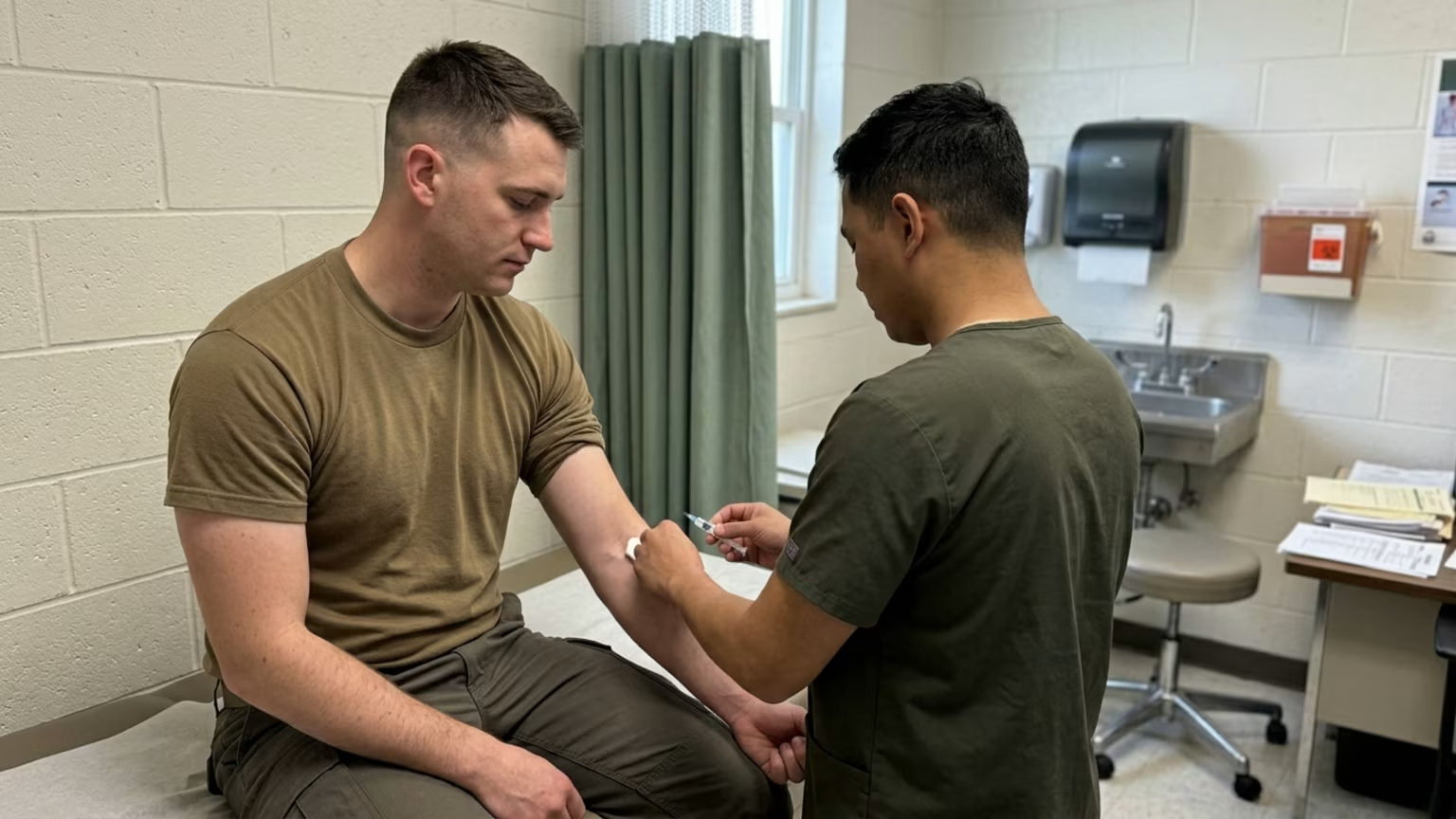
JAMA estimates low testosterone readings in active-duty Army men. See the threshold data, study limits, and implications for clinical follow-up.

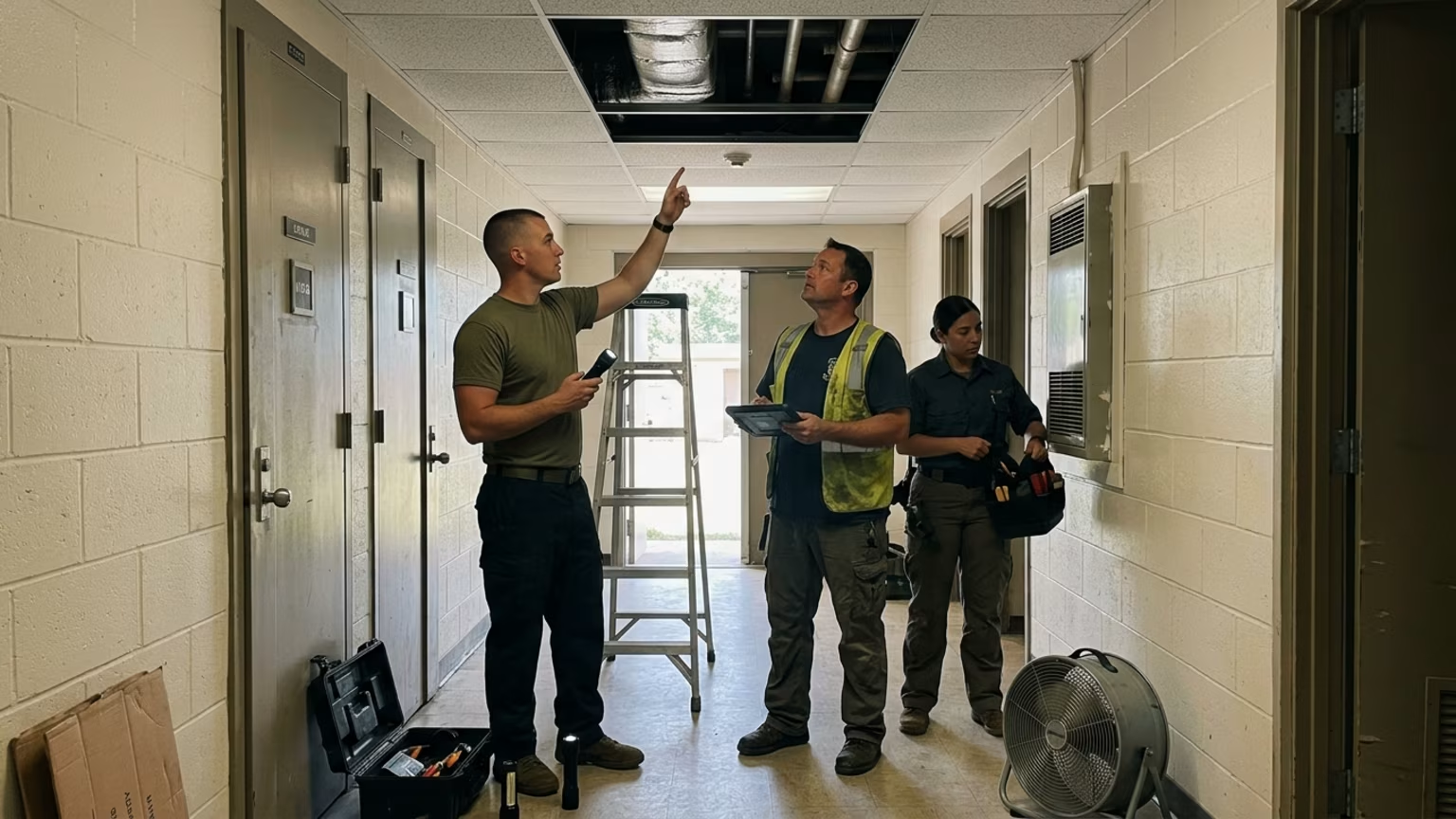
The Army’s HVAC task force targets hot barracks. Here is what its project figures mean and how to assess future housing and sleep-related claims.

The BRIDGE Act proposes a whole-family military transition pilot. Read who it would serve, what support it includes, and what remains unresolved.
Build better habits around strength, recovery, sleep, hormones and healthy aging with practical guidance for active military personnel and veterans.
Explore BattleVet