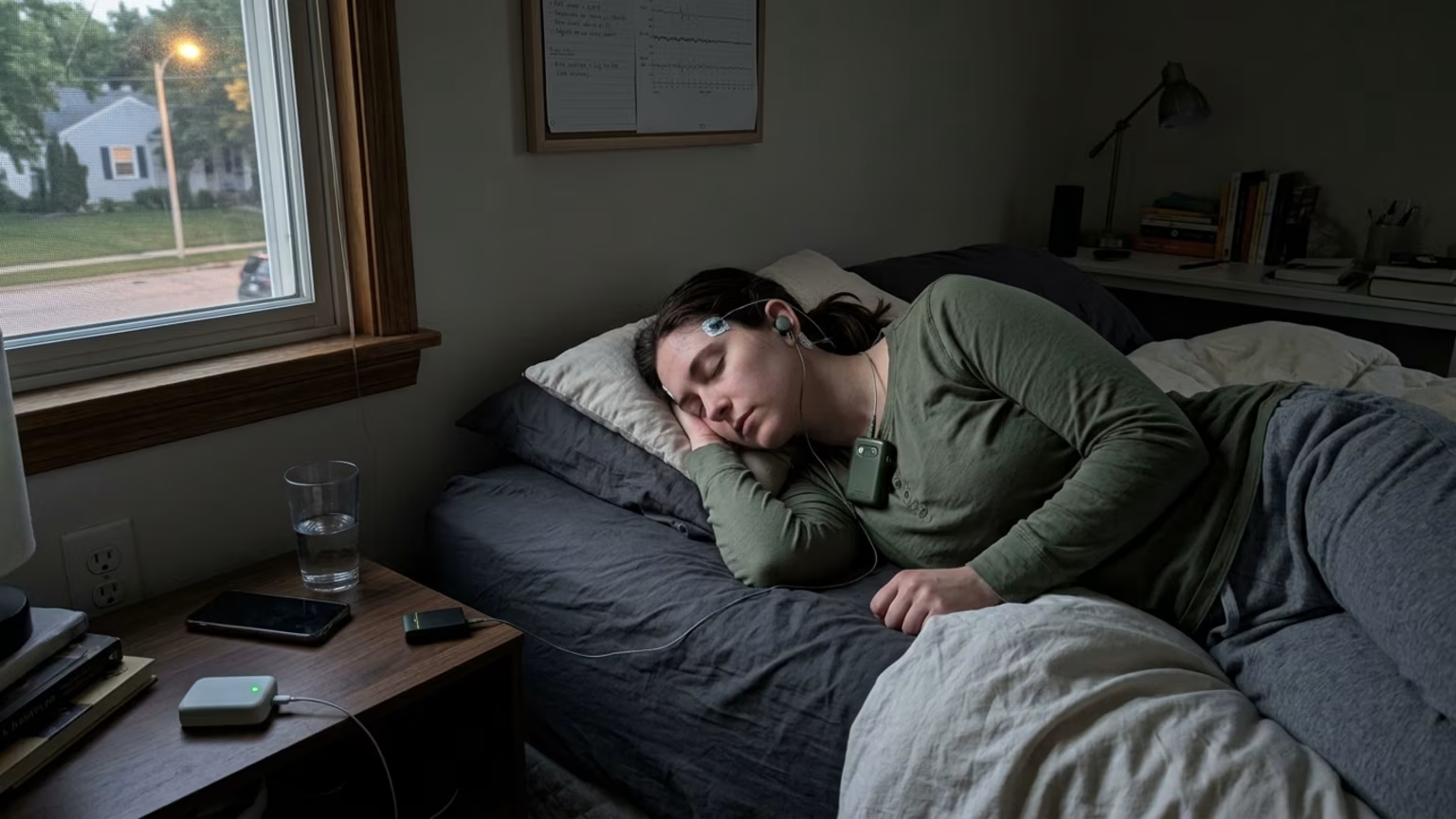

A 2026 study in Sleep evaluated acoustic stimulation for memory in young adults. Discover what the findings mean for veteran sleep health and cognitive recovery.





On September 11, 2026, the journal Sleep published a new peer-reviewed study evaluating closed-loop acoustic stimulation during rest. The article is titled “Acoustic enhancement of slow wave sleep improves memory retention by coordinating brain oscillatory rhythms and autonomic activity.” This research investigated whether a precise delivery of sound could improve overnight memory consolidation in human subjects. The investigators utilized a randomized, single-blind crossover design to test their hypothesis.
The study enrolled 20 healthy young adults with a mean age of 25 years, and 75 percent of the participants were female. During the protocol, researchers compared one night of closed-loop acoustic stimulation against a sham condition. They administered this intervention specifically during non-rapid-eye-movement sleep stages 2 and 3. By comparing these two conditions, the team aimed to observe how targeted sound impacts the brain as it transitions through deep rest phases.
To evaluate the outcome of the intervention, the authors assessed memory using a paired-word-associates task designed to measure overnight retention. The study concluded that acoustic stimulation may enhance memory consolidation by optimizing coordination between sleep oscillatory networks and autonomic activity. The outcome was strictly overnight retention on a paired-word task. The researchers did not measure marksmanship, navigation, reaction time, or executive function.
For active military personnel and veterans, new research regarding sleep carries significant weight. A 2026 review on military environments notes that operational demands are associated with a greater vulnerability to sleep disorders. This same review states that these sleep disorders can affect cognitive functions in military personnel. Given the rigorous demands of service, many veterans actively look for ways to protect their thinking and recall.
I remember waking up after a poor night of sleep and realizing that my training recovery was taking much longer than it used to. I realized that readiness is more than just pushing through the fatigue. It requires a dedicated approach to sleep and hormonal health, which completely shifted how I view long term capability. While my initial focus was on physical recovery, the exact same biological foundation is required for cognitive restoration.
Improved sleep quality is central to healthy aging, stress management, and daily operational readiness. Finding evidence backed methods to support these goals aligns closely with how many former service members approach their health. You can read more about these foundations in our library of recovery and sleep materials. Applying laboratory research to everyday life requires a careful reading of the evidence.
The data from the recent publication provides a highly specific picture of brain activity during the acoustic intervention. The researchers found that memory enhancement was linked to coordination among slow oscillations, sleep spindles, and autonomic activity. Interestingly, the benefit was not simply tied to a larger absolute amount of slow-wave activity during the night. Instead, the precise interaction between different types of brain waves appeared to drive the positive memory outcomes.
Specifically, the study reported that memory improvements were associated with increased spindle nesting with slow oscillations. This nesting occurred in the 0.5 to 1.5 Hz range relative to delta waves operating above 1.5 to 4 Hz. Alongside these brain wave interactions, the researchers observed elevated parasympathetic activity during slow-wave sleep. They measured this autonomic response by tracking heart-rate variability in the participants.
According to the authors, the ratio of slow-oscillation-to-delta-wave spindle nesting was a key predictor of memory performance. They reported that this nesting ratio and the measured parasympathetic activity were strongly correlated. This correlation suggests a potential relationship between sleep brain rhythms and autonomic regulation during the process of memory consolidation. It is important to note that the primary source does not establish that this intervention protects broader cognition.
While the results in young adults are notable, a 2026 review of non-invasive neurostimulation in aging describes acoustic stimulation as an experimental approach. The review notes it is intended to influence non-rapid-eye-movement slow waves, spindles, and sleep-dependent memory consolidation. However, the available data for older populations is less definitive. A separate preliminary preprint examined 16 healthy adults aged 60 or older using phase-locked auditory stimulation.
In that small preprint study, the acoustic stimulation did increase several sleep oscillatory measures. The researchers noted that the stimulation preserved overall sleep architecture while altering specific activities like frontal theta and spindle power. Despite these measurable physiological changes, word-pair recall did not improve at the group level for the older participants. This context is vital when evaluating long term healthy aging strategies, as younger adult outcomes do not automatically translate to older populations.
This new research clarifies that acoustic stimulation for memory enhancement is a highly specific, laboratory controlled process. The intervention required a closed-loop system that was precisely timed to ongoing sleep slow waves. Because standard consumer sound machines or smartphone apps deliver untimed audio, they cannot replicate this specific physiological coordination. Service members should not interpret this study as evidence that standard pink noise products can protect memory.
Furthermore, the peer-reviewed trial only enrolled 20 participants and evaluated a single night of stimulation. These parameters mean the study does not establish safety, adherence, or real-world effectiveness over extended periods. The findings do not demonstrate any benefit for people managing insomnia, obstructive sleep apnea, traumatic brain injury, or chronic pain. These conditions are highly relevant to military populations and require established medical interventions.
Implementing a closed-loop sleep stimulation system would also be difficult in many operational settings. Shared sleeping quarters, irregular shift work, sudden alarms, and ambient noise create environments that interfere with stable sleep timing. The current evidence does not provide a field validation study showing how this technology would perform under those demanding conditions. The priority remains identifying and treating established medical causes of sleep disruption.
If you experience severe daytime sleepiness, heavy snoring, or awaken gasping for air, you should seek a proper evaluation for sleep apnea. Sleep apnea is a major concern in the veteran community and requires clinical attention. The primary source study explicitly did not test individuals with obstructive sleep apnea. Managing these foundational issues provides a much stronger return on investment than experimenting with unproven audio tools.
Veterans managing persistent insomnia should consult a qualified clinician about evidence based care. Established clinical guidelines recommend specific behavioral therapies for insomnia that address the root causes of the condition. Standard sleep hygiene education alone is often not adequate treatment for chronic sleep disruption. Readers seeking clear guidance on these topics can review our resources on sleep and stress management.
Individuals who are interested in acoustic stimulation must treat it as an experimental practice. You should avoid excessive volume and stop using audio devices if they cause awakenings or worsen your insomnia. It is always wise to discuss new interventions with a sleep professional, especially if you are managing deployment related health conditions. An experimental acoustic intervention should be viewed as a possible future adjunct rather than a replacement for standard medical evaluations.
As researchers continue to map the relationship between brain oscillatory rhythms and autonomic regulation, will future clinical trials validate closed-loop acoustic interventions for veterans managing deployment related sleep disruption?
Follow BattleVet for practical guidance on military and veteran health, strength, recovery, testosterone, sleep and healthy aging. Stay connected for new articles, research backed insights and clear information to help you stay capable for the years ahead.


Australian veterans seek transparency on the 122 Royal Commission recommendations and prepare for a new $5,000 allied health threshold starting next July.

Recent 52-week trial data shows structured exercise reduced arterial disease markers more than a GLP-1 drug alone. Learn what this means for veteran health.
Older veterans evaluating low testosterone need clear facts. Learn how to navigate symptom tracking, repeat clinical testing, secondary causes, and TRT decisions.
Build better habits around strength, recovery, sleep, hormones and healthy aging with practical guidance for active military personnel and veterans.
Explore BattleVet