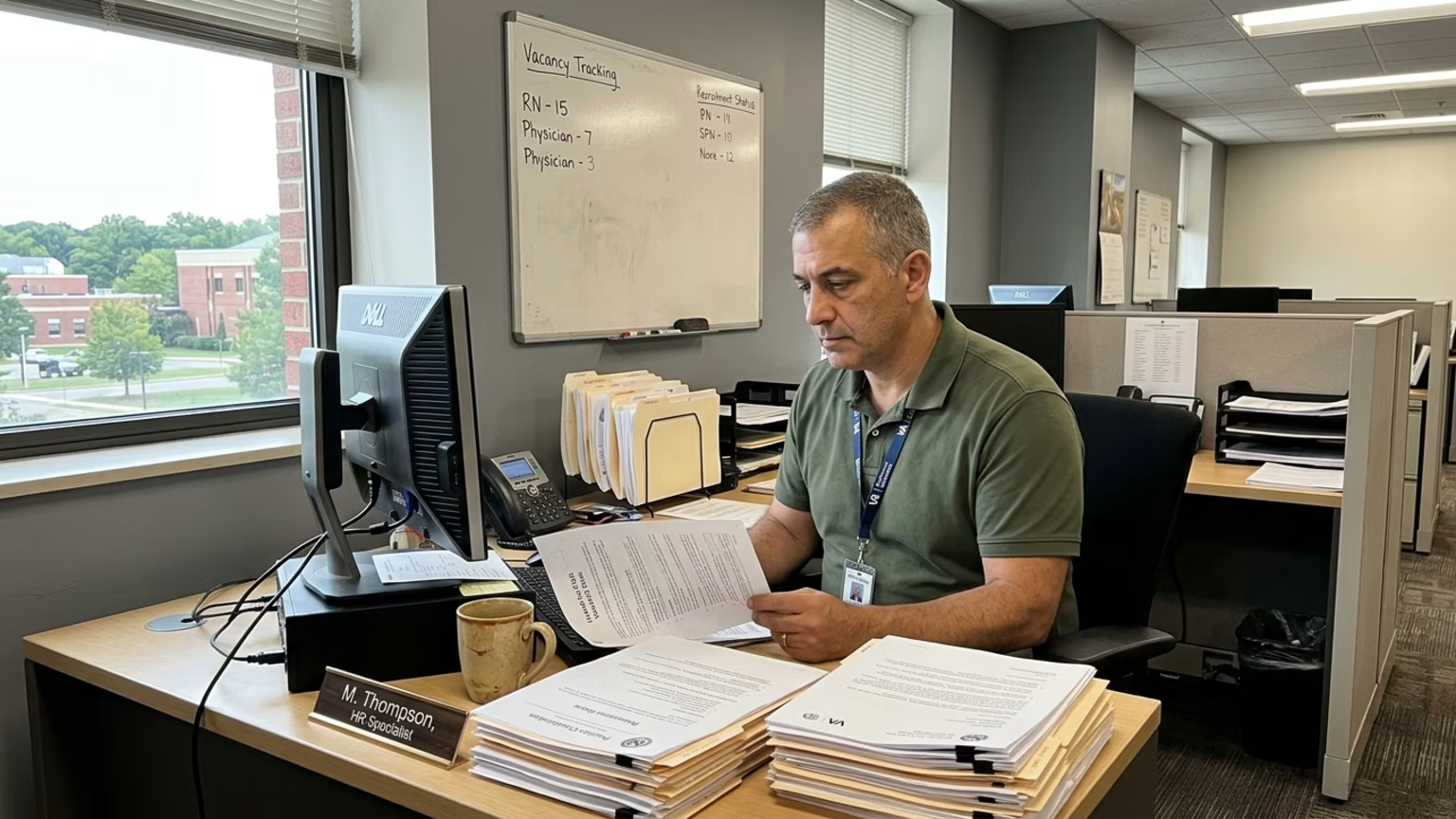

A 2026 OIG review identifies severe staffing shortages across 139 VA health facilities, impacting mental health and nursing roles. Plan your care proactively.





Veterans experiencing a mental health emergency should never wait for a routine medical appointment to seek help. If you are in immediate danger, call 911 right away. For urgent support, dial 988 and press 1 for the Veterans Crisis Line. You can also text 838255 to reach trained responders immediately.
In mid-September 2026, the Department of Veterans Affairs Office of Inspector General released a new staffing review. The report identified thousands of difficult-to-fill occupations across the Veterans Health Administration. Based on surveys conducted in late March and early April 2026, the data reflects input from 139 VA reporting facilities. The descriptive assessment documents 4,712 severe staffing shortages reported for fiscal year 2026.
Dr. David Krulak serves as the assistant inspector general for healthcare inspections at the OIG. He characterized the review as a descriptive, informational report intended to assess facility needs. The agency made no specific recommendations to VA leadership concerning the collected data. Instead, the document serves to highlight ongoing recruitment challenges across the massive medical system.
Because the OIG made no recommendations, the review does not identify specific solutions. It does not dictate which recruitment, retention, compensation, or contracting interventions would resolve the ongoing shortages. The reporting window also limits how the data can be interpreted. Since the survey was conducted in early spring, local conditions may have shifted by the report's publication in September 2026.
This survey highlights the persistent recruitment pressure facing the federal healthcare system today. However, the designation of a severe shortage does not automatically equal an empty position. VA Press Secretary Quinn Slaven clarified that the designation identifies occupations that are difficult to fill. It does not necessarily indicate the presence of vacancies at every affected facility.
The survey is perception-based and relies on responses from health system leaders rather than an independent census. Because it measures administrative difficulty, it serves as an indicator of recruitment strain. Senator Richard Blumenthal stated that the report shows staffing shortages continue to increase in number and impact. This interpretation points to a growing concern among lawmakers regarding timely patient access to care.
Despite these reported difficulties, VA officials emphasize that service capacity continues to expand. The fiscal 2026 survey period followed a broader reduction of approximately 30,000 VA jobs. The VA workforce declined by more than 19,000 employees after September 26, 2025. This recent decline included roughly 11,000 Veterans Health Administration employees.
Even with these workforce reductions, the department reports measurable growth in patient care metrics. Since January 2025, officials report opening 41 health clinics and enrolling an additional 250,000 veterans. The VA also increased appointments at its facilities by 4.1 percent compared to fiscal 2024. During that same period, private sector appointments increased by 12 percent.
For veterans actively managing their health, these competing perspectives illustrate a complex reality. The national system is treating more patients and expanding its physical footprint. At the exact same time, local medical centers are struggling to hire enough specialized staff to comfortably meet that demand. A national percentage can easily conceal substantial differences among specific geographic regions and outpatient clinics.
The scale of the recruitment challenge is evident in the sheer variety of roles affected. The OIG review found severe shortages across 389 distinct occupations. The 4,712 severe shortages reported for fiscal 2026 represent a notable increase over past cycles. This figure is significantly higher than the 2,959 shortages reported for fiscal 2024.
This upward trajectory aligns with recent historical patterns within the federal agency. The latest findings follow what Military Times and Ground News described as a major increase in reports during 2025. Clinical roles remain the most heavily impacted segment of the healthcare workforce. Nearly all reporting facilities identified severe shortages involving their medical officers.
Exactly 97 percent of reporting facilities flagged medical officers as a severe shortage occupation. This represents an increase from 94 percent in fiscal 2025. The data shows similar pressure on nursing staff recruitment across the healthcare network. Eighty-six percent of facilities reported severe shortages involving nurses, compared with 79 percent the previous year.
Mental health and specialized nursing roles were among the most affected clinical occupations overall. The review found that 59 percent of reporting facilities identified severe shortages involving practical nurses. Simultaneously, 58 percent of facilities reported difficulty hiring psychologists. Other leading clinical shortage categories included psychiatrists, social workers, and nursing assistants.
The recruitment struggle also extends into vital nonclinical support positions. Among Veterans Health Administration leaders, 57 percent reported difficulty hiring VA police officers. Another 53 percent reported difficulty hiring custodians for their medical centers. The leading nonclinical shortage categories also included medical support assistants, food-service workers, and health-care engineers.
These nationwide staffing pressures change how veterans should approach their personal healthcare logistics. Waiting until a physical issue becomes unbearable is a high-risk strategy in a constrained system. Veterans seeking mental health, primary care, nursing, or specialty services should contact their care team early. Proactive scheduling helps mitigate the impact of longer wait times for specialized clinical staff.
When you request care, you must become a deliberate advocate for your own timeline. Patients can ask about the earliest available appointment, cancellation lists, and secure telehealth options. If local wait times are excessive, veterans should inquire about community-care pathways. However, the staffing report itself does not guarantee that these alternative options will be immediately available.
Documentation is an essential part of navigating a busy medical system effectively. Veterans should document all appointment requests, referral dates, cancellations, and messages sent to their providers. This is especially important when the medical care you need is highly time-sensitive. Accurate records ensure that you can verify your timeline if you need to request alternative care options later.
I remember waking up after a poor night of sleep and realizing that my training recovery was taking much longer than it used to. I realized that readiness is more than just pushing through the fatigue. It requires a dedicated approach to sleep and hormonal health, which completely shifted how I view long term capability. Addressing these foundational issues requires timely access to comprehensive medical testing and professional guidance.
If you wait for a convenient time to schedule these vital health checkups, administrative delays can stall your progress. Veterans prioritizing a dedicated approach to sleep and recovery must plan their consultations well in advance. Securing lab work and follow-up appointments early ensures your physical restoration stays on track. The same logic applies to anyone building long-term strategies for healthy aging.
Active-duty personnel and recently discharged service members should treat this report as a practical scheduling prompt. Navigating veteran life and transitional healthcare demands a highly organized approach to medical records. Renew your prescriptions, schedule essential follow-ups, and request necessary referrals with plenty of lead time. You can learn more about managing your physical readiness through BattleVet's core guidance.
Veterans should evaluate access locally rather than assuming their facility mirrors the national data perfectly. National shortage percentages act as broad warning signals, but they do not dictate your individual outcome. They do not reveal whether a particular medical center lacks the exact specialty a patient needs. Evaluate your local access carefully, maintain open communication with your providers, and plan your care schedule proactively.
As the Veterans Health Administration attempts to balance growing patient enrollment with persistent recruitment hurdles, how will facility leaders adjust their hiring strategies to secure the clinical staff veterans rely on?
Follow BattleVet for practical guidance on military and veteran health, strength, recovery, testosterone, sleep and healthy aging. Stay connected for new articles, research backed insights and clear information to help you stay capable for the years ahead.


The Marine Corps adopted sex-neutral fitness grading for combat roles. Early data shows over 91% of tested female Marines passed the 210-point minimum.


A recent Brown University study found younger military veterans have higher PFAS concentrations than civilians, prompting new clinical screening conversations.
A new survey highlights veteran perspectives on the Take Care of America's Veterans Act, detailing the debate over proposed disability rating changes.
Build better habits around strength, recovery, sleep, hormones and healthy aging with practical guidance for active military personnel and veterans.
Explore BattleVet