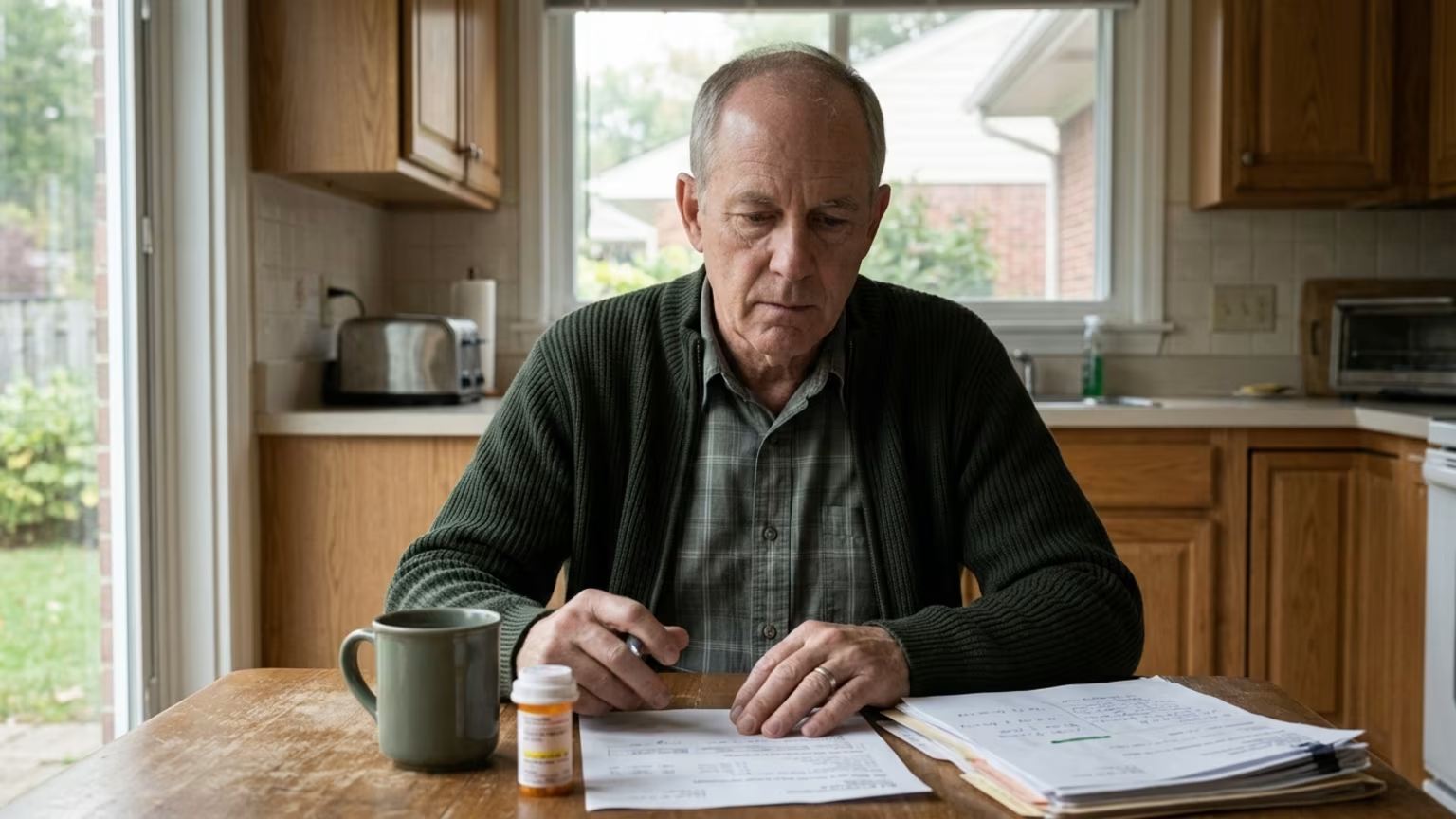

Clinicians are warning of early-onset dementia risks among 9/11 survivors. Understand how toxic exposure impacts long-term cognitive health and care planning.





On September 3, 2026, clinicians and public officials gathered at the Icahn School of Medicine at Mount Sinai. They met to assess the continuing health effects of the September 11 attacks. Participants evaluated the ongoing needs of survivors and responders. During this meeting, early-onset dementia and other cognitive disorders emerged as a major focus among exposed individuals.
Dr. Benjamin J. Luft serves as medical director of the World Trade Center Health Program Clinical Center of Excellence at Stony Brook. Over a decade, Luft observed an increase in dementia-related cognitive disorders among patients exposed to toxins at unusually young ages. He characterized this cognitive pattern as distinct from ordinary, unexplained dementia. Luft argued that environmental exposure should be considered when clinicians evaluate young patients showing signs of cognitive decline.
This update holds direct relevance for the military and veteran community. Many former service members were present at the attack sites or worked in rescue and recovery environments. Veterans also supported related security operations in the days following the disaster. The Mount Sinai discussion emphasized that the affected population extends far beyond police officers and firefighters.
Dr. Denise Harrison works at the World Trade Center Health Program Clinical Center of Excellence at NYU Grossman School of Medicine. She explained that local workers, students, residents and other support personnel face ongoing risks. Harrison pointed out that occupational roles, socioeconomic status and language access all influence exposure severity and long-term outcomes. She stressed that veteran lifestyle and healthcare models must include survivors who were not traditional first responders.
Different exposed groups often experienced different levels of exposure and varying access to care. Evaluating these differences remains difficult because immediate environmental sampling after the attacks was limited. Reconstructing exactly who was exposed to which substances, at what concentration and for how long is an ongoing challenge. The broader health picture for responders continues to evolve as they age.
Alongside cognitive impairment, researchers monitor a range of serious physical ailments. The broader health picture includes respiratory disease, cancer, mental health conditions and cardiovascular concerns. Autoimmune disorders and hearing problems are also common among responders. Researchers describe physical illness, cognitive decline and emotional distress as interconnected rather than isolated problems.
This intersection is particularly clear when examining psychological trauma. Around 23% of World Trade Center responders are reported to have been diagnosed with PTSD. This rate is substantially higher than the estimated lifetime prevalence of about 6% in the general United States population. The reporting highlights that coordinated mental, cognitive and physical support is necessary decades after the disaster.
Reported cognitive difficulties among responders include problems with memory, concentration, mental sharpness and emotional control. These issues frequently occur alongside anxiety and depression. Patients also report intrusive memories, sleep problems and a fear of losing independence. Veterans evaluating their own military health should discuss these interconnected concerns with their primary care clinicians.
Recent clinical studies provide a closer look at how toxic exposure and trauma correlate with long-term brain health. A study described in related reporting tracked cognitive outcomes from 2014 through 2022. The study monitored more than 5,000 World Trade Center first responders who did not have dementia at baseline. During the approximately five-year observation period described in the report, 228 of those responders developed dementia before age 65.
The findings showed a distinct relationship between exposure severity and diagnosis rates. Responders with the most severe exposure to potentially neurotoxic dust and debris had substantially higher dementia incidence. This higher incidence rate was measured against responders with minimal exposure or those who consistently used respiratory protective equipment. The reported association remained significant even after adjustment for demographic, lifestyle, medical and genetic factors.
While these findings are compelling, the available report does not provide the study’s full effect sizes or specific exposure thresholds. The data points to a strong association rather than proving that dust exposure alone causes dementia in every individual. A separate 2025 MRI-based study examined physical brain changes in exposed populations. The researchers used an artificial intelligence model trained on more than 11,500 MRI scans from healthy people ranging from ages 5 to 95.
This study reported that male World Trade Center responders with PTSD had brains appearing roughly three years older than their chronological age. By contrast, responders without PTSD had estimated brain ages that approximately matched their actual ages. The MRI findings also linked longer exposure times to accelerated apparent aging. Each additional month spent working at Ground Zero was associated with roughly four to five additional months of apparent brain aging.
This study highlights a clear association between PTSD, exposure duration and estimated brain age. However, researchers caution that an apparent brain age difference is a research metric rather than a clinical diagnosis. Related brain scan comparisons also identified similar increases in beta-amyloid deposits among two distinct groups. Researchers found these deposits in World Trade Center responders and in workers exposed to neurotoxic metals and industrial pollution in northern Italy.
Beta-amyloid deposition closely relates to healthy aging and longevity as well as general cognitive decline. However, the presence of increased deposits does not establish that every responder will inevitably develop dementia. As survivors age, administrative data shows a growing recognition of these ongoing health conditions. Allison Turkel, special master for the September 11th Victim Compensation Fund, provided recent application statistics.
The fund received more than 800 new applications per month in 2026. This rate represents approximately 200 more applications per month than the fund received in 2023. Turkel also reported that the fund paid almost $2 billion across 9,800 cases during the previous year. This growing volume suggests that some survivors are only now documenting illnesses they associate with their exposure.
According to WSKG reporting, survivors must first have their illness certified by the World Trade Center Health Program. This certification is required before they can qualify for compensation from the Victim Compensation Fund. These emerging findings require a shift in how clinicians and former service members approach long-term health planning. Dr. Luft’s practical clinical message urged action before symptoms become severe.
Clinicians need to recognize memory and other cognitive changes early and identify people at greatest risk. Medical professionals should not wait until a person experiences substantial functional impairment before starting an evaluation. For veterans and responders, new or progressive problems with memory, concentration or word-finding require attention. Issues with judgment, sleep or mood should immediately trigger a discussion with a clinician.
These changes should not be automatically dismissed as normal aging or temporary stress. Anyone experiencing rapidly worsening confusion or sudden neurological symptoms should seek prompt medical care. A research finding about apparent brain aging does not substitute for a proper neurological or neuropsychological assessment. Former service members who worked in related rescue, recovery or security roles should preserve a detailed exposure history.
Useful documentation includes dates, specific locations and work duties. Patients should also record their symptoms, any history of dust exposure and their use of respiratory protection. Veterans should ensure relevant exposure and treatment information is available in both civilian and VA medical records. While the cited sources do not outline a specific VA documentation mandate, thorough personal records support better clinical care.
Finally, people with possible 9/11 exposure should ask if an evaluation through the World Trade Center Health Program is appropriate. The Centers for Disease Control and Prevention states that this program provides no-cost medical monitoring and treatment. The program covers World Trade Center-related health conditions for eligible responders and survivors. Eligible patients should not be billed for covered services, including deductibles and copayments.
The health consequences of the September 11 attacks are clearly still evolving decades later. Cognitive changes and dementia concerns are emerging alongside long-recognized respiratory and psychological conditions. Reconstructing exposure histories remains a complex hurdle, yet early recognition of cognitive decline offers a clear path toward better symptom management. As specialized health programs continue treating these conditions as active priorities, how will ongoing research into toxic dust exposure shape medical surveillance protocols for future disaster responders?
Follow BattleVet for practical guidance on military and veteran health, strength, recovery, testosterone, sleep and healthy aging. Stay connected for new articles, research backed insights and clear information to help you stay capable for the years ahead.


A 2026 randomized trial suggests creatine may help adults aged 45 to 65 maintain muscle and strength. Learn how these findings apply to veteran healthcare.


The Army is modernizing fitness testing data with the AFT Go application. Learn how mobile score capture and new wellness guidance impact service members.
A 2026 study shows daily stress links to disrupted sleep through racing thoughts, offering new insights for veteran recovery and CBT-I sleep care.
Build better habits around strength, recovery, sleep, hormones and healthy aging with practical guidance for active military personnel and veterans.
Explore BattleVet