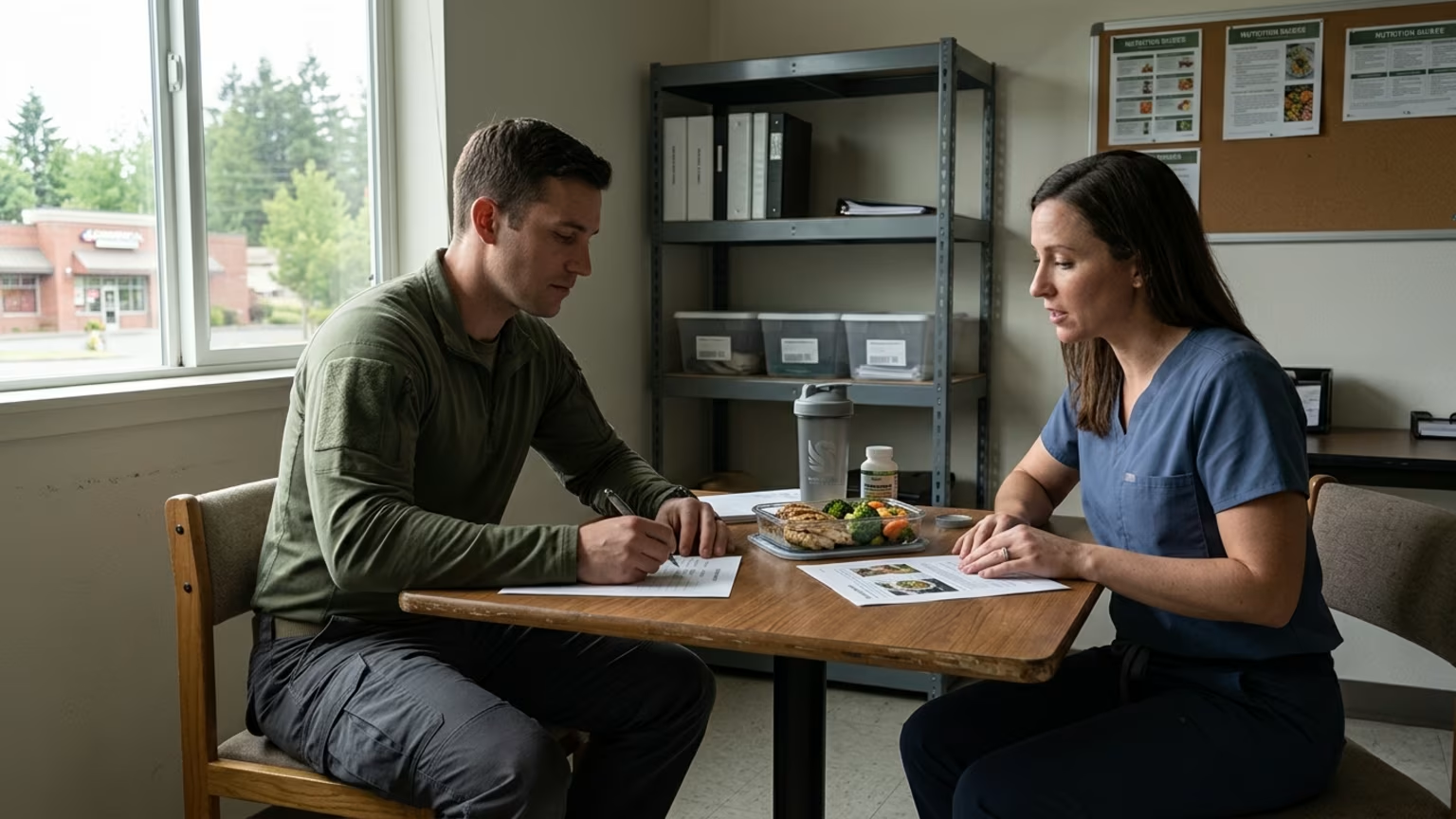

U.S. Special Operations Command awarded a contract for a nutrition platform connecting tactical troops with dietitians. We examine the operational impact.





On September 21, 2026, U.S. Special Operations Command awarded a sole source contract to Teamworks Tactical Solutions. This agreement establishes a dedicated nutrition platform intended to connect service members with performance dietitians. The system is also built to coordinate individual meal planning with military dining facilities. According to the reported statement of work, the program is intended to develop meal plans that optimize human performance and lethality. The contract represents a direct organizational effort to support more than 18,000 tactical troops operating at geographically dispersed locations.
The agreement signifies a formal shift from an earlier arrangement conducted through the Air Force Research Laboratory. That previous setup was managed through the STRONG Lab before transitioning to this direct contract with SOCOM. Teamworks chief strategy officer James Coffos noted that SOCOM had already used the product for years. This means the new agreement appears to formalize or expand an existing capability. It does not introduce an entirely untested system to the tactical force.
Coffos stated that his company worked directly with SOCOM’s senior performance dietitian to adapt the software. They specifically tailored the platform to meet the command’s rigorous operational requirements. Teamworks Tactical Solutions already has a broader business background in this space. They actively work with Division I athletes alongside professional and Olympic-level competitors. This background highlights a growing convergence between elite sports nutrition and tactical military preparation.
This update matters deeply for active personnel and veterans who prioritize long term physical readiness. The military is clearly moving toward integrating nutrition directly with comprehensive human performance programs. Historically, food service was treated as completely separate from physical training and operational readiness. Coffos argued that a software platform managing a human performance program requires serious contextual evaluation.
The application must be viewed in light of the severe consequences of tactical work. In these environments, physical performance can have direct and immediate life or death implications. Coffos described the application's core purpose as reducing friction when service members make food decisions. Removing this friction potentially allows operators to devote more attention to their actual mission requirements.
He interpreted SOCOM’s use of the word lethality as sustained physical performance late in a demanding mission. He explicitly clarified that he does not view it as a claim that a specific food directly makes an individual more lethal. He compared this operational problem to endurance athletes running out of fuel late in a competitive race. The true performance challenge is maintaining capability deep into a grueling physical effort.
His illustrative example involved an operator roughly 20 hours into a mission. This hypothetical service member was carrying approximately 65 pounds of equipment and sleeping about four hours. This was presented as an illustrative scenario to highlight severe operational strain rather than a measured outcome from the app.
In our experience at BattleVet, we have seen how these exact physical stressors compound over time. I remember waking up after a poor night of sleep and realizing that my training recovery was taking much longer than it used to. I realized that physical readiness is more than just pushing through the immediate fatigue. It requires a dedicated approach to sleep, precise nutrition, and hormonal health to remain capable over the years. When service members ignore the quality of their fuel, their recovery timelines stretch, and their overall resilience drops.
This digital platform introduces several concrete shifts in how troops manage their daily food intake. The system is designed around a network of up to 55 performance dietitians. Based on the stated maximum staffing and troop levels, the planned ratio is approximately one dietitian for every 327 supported troops. Service members can use the application to view nutritional ratings for various dining facility food options.
When a military dining facility is not accessible, users can seek guidance about other available food. They can adjust their nutrition plans according to specific food preferences and personal fitness goals. However, the platform is not presented as a substitute for individual judgment or nutrition literacy. Coffos cautioned that technology does not remove the need for service members to understand basic fueling principles.
Service members must actively choose food that supports their physical requirements. They cannot simply select what appears most appealing in the moment. The application's guidance may also be less useful in highly austere settings. Poor connectivity, lack of refrigeration, and intense mission demands can heavily limit a service member’s actual choices.
Personalization can accommodate preferences, but it does not guarantee that a user will actually have access to the recommended foods. Active duty personnel should view this performance nutrition resource as a practical decision support tool. It is not a replacement for learning fundamental hydration, sleep management, and food safety principles.
Service members who interact with a performance dietitian should ensure the discussion reflects actual operating conditions. They should proactively bring up mission duration, training load, sleep limitations, and likely field food constraints. The app’s dining hall function is most useful when several meal choices are available. It helps users select options that fit a specific training objective on any given day.
These digital tools reflect a broader movement that includes changing the physical food environment. For instance, the Army is planning a Campus Style Dining Venue model at Fort Bragg. This model is intended to replace traditional dining facilities with food court style venues. These new locations will feature multiple stations, extended operating hours, and a heavy emphasis on performance nutrition.
The Fort Bragg plan calls for each venue to have executive chef and registered dietitian oversight. Recipes will be specifically aligned to the Army’s Holistic Health and Fitness standards. The plan is designed to provide reliable access to hot food outside conventional meal periods. This specifically helps soldiers returning from early physical training or late field operations.
The Army has also evaluated food availability, convenience, and affordability across its major installations. They used the Military Nutrition Environment Assessment Tool to review shoppettes, commissaries, dining facilities, and vending machines. According to the resulting Army report, Fort Knox received an overall silver rating in its annual nutrition environment assessment. These developments suggest that military nutrition efforts are addressing both individual counseling and the surrounding food environment.
Veterans and former service members can apply this broader lesson to their own training routines long after they leave active duty. You must match nutrition planning to your current training demands, recovery needs, and real world food access. As your lifestyle changes during transition, your caloric needs and fueling strategies must adapt accordingly. You do not need a military specific application to implement these fundamental fueling strategies in civilian life.
The available reporting clearly outlines the contract’s intended capabilities and structural design. However, it does not establish that the application has actively improved mission outcomes, physical test scores, or injury rates. The coverage figures represent program design numbers rather than confirmed proof of staffing at full capacity. The article does not disclose the contract’s dollar value, specific implementation milestones, or performance benchmarks.
The sole source procurement status may raise questions about competition and the evidentiary basis for selecting the vendor. However, the available reporting does not provide enough procurement documentation to assess those issues conclusively. Leaders and commanders should distinguish between providing nutrition resources and proving that those resources improve operational outcomes. Meaningful evaluation of these systems would require transparent measures such as participation rates, adherence, and validated performance outcomes.
As these integrated human performance programs expand across the armed forces, a critical question remains. How will the military accurately measure the true impact of these digital nutrition platforms on long term veteran health and injury prevention?
Follow BattleVet for practical guidance on military and veteran health, strength, recovery, testosterone, sleep and healthy aging. Stay connected for new articles, research backed insights and clear information to help you stay capable for the years ahead.



A breakdown of the September 2026 VA explainer confirming the VA-guaranteed home loan is a lifetime benefit that veterans can use more than once.

The new DoD Cryopreservation Demonstration Program offers eligible active-duty service members up to $500 in reimbursement for sperm preservation.

A 2026 review links sarcopenia to a 42 percent higher relative dementia risk. Learn why veterans should track physical function and muscle strength as they age.
Build better habits around strength, recovery, sleep, hormones and healthy aging with practical guidance for active military personnel and veterans.
Explore BattleVet